Acrocanthosaurus
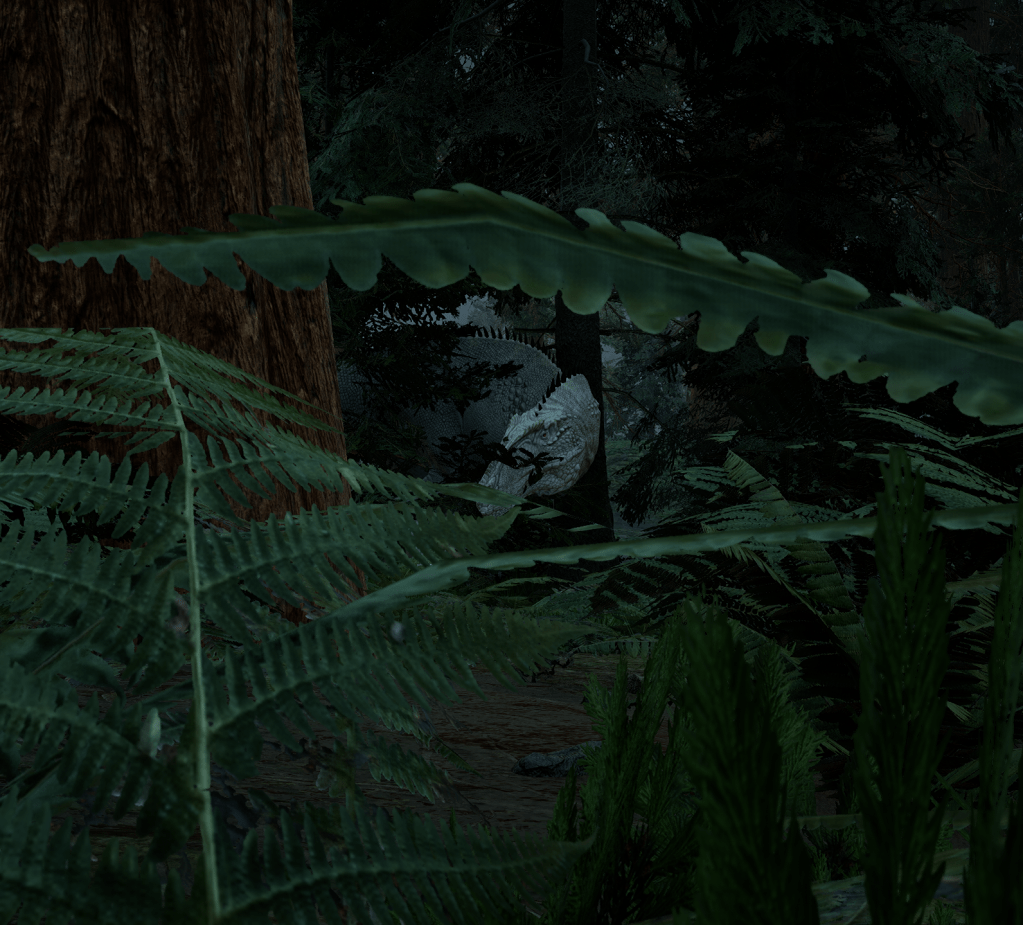
The “High-Spined Lizard” of North America.
The Acrocanthosaurus, or “high-spined lizard,” reigned as the apex predator of North America during the Early Cretaceous period, approximately 110 to 125 million years ago. Belonging to the Carcharodontosauridae family, a lineage of “shark-toothed” theropods, this massive carnivore reached lengths of up to 11.5 meters (38 feet) and weighed nearly 6 metric tons. It is most famous for the elongated neural spines extending from its vertebrae; these spines were likely covered in powerful muscle or a fatty hump, providing the structural support needed to hunt the massive sauropods of the Texas and Oklahoma floodplains. Its presence in the fossil record marks a significant era in dinosaur evolution, serving as a biological bridge between the smaller predators of the Jurassic and the later giants like Giganotosaurus.
Regarding its development, bone histology reveals that Acrocanthosaurus followed a “fast-growth” strategy typical of large theropods. It underwent an explosive growth spurt during its adolescence, reaching full skeletal maturity in roughly 10 to 12 years. During this period, its neural spines thickened significantly to accommodate the increasing weight of its torso and the powerful neck muscles required to stabilize its heavy skull during a strike. Analysis of growth rings within its fossilized bones suggests a maximum lifespan of at least 20 to 25 years. This combination of rapid maturation and a massive, muscular frame allowed Acrocanthosaurus to dominate its ecosystem, maintaining its status as a top-tier hunter for millions of years.
Tier: 5
Dimorphism: Yes, females are duller with some distinguishing color traits usually present in female pack leads. Males will always be bright and vivid, but they may have some dull distinguishing patterns especially those who have failed to be selected by a mate.
Habitat: Coastal Floodplains, Subtropical Forests and River Deltas, Swamps with dense foliage
- Riparia: Black Fern Hills and Cedrus Forest
- Gondwa: Birchwoods, Desolate Pass, and Titan’s Pass
Diet: Carnivore
Active Times: (Diurnal) Active during the day, can be found resting at night.
Group Size: 3 Adults/Sub Adults, 1 Flamekin
Attackers/Defenders: 2 individuals
Nesting Season: Spring and Summer
Offspring: Up to 5
Adoption: ✅
Behavior
The Acrocanthosaurus is a master of concealment that stalks dense subtropical habitats to ambush herbivores, driven by a lethal obsession with fresh blood and a strict refusal of carrion. This fixation is so volatile that it may turn on wounded packmates during a frenzy. Its life is defined by high-stakes rituals, from a perilous “food courtship” where failing to satisfy a female’s specific palate can be fatal, to nesting in caves adorned with the bones of fallen rivals. Despite its solitary nature, it maintains a unique symbiosis with aerial scouts like Tropeognathus, Rhamphorhynchus and Thalassodromeus to locate targets from afar.
As a sentinel of its domain, this predator displays extreme territoriality, slaughtering or driving out any rival that dares enter its borders. While it may tolerate certain non-threatening creatures, it remains a “territorial phantom” that usually spots intruders long before they see it. Its explosive speed and hyper-vigilance ensure that by the time an Acrocanthosaurus is visible, it has already committed to the kill, leaving virtually no hope for escape.
An Acro group will always be led by a female Acro, because a female helps to regulate and suppress the males from infighting. If the female Acro is mated her Ward, a Male Acro, will stand ready to be her defense at all times placing himself on the front lines first to shield his maiden and will always be the first to launch an attack. A female Acro’s voice is more important than her bite, though equally vicious.
Courting
Acrocanthosaurus are not known for being romantic or engaging in elaborate performative displays; instead, their bonds are forged strictly through the gut, where a male’s success relies on leading a female to a fresh kill that satisfies her unpredictable dietary whims. This “courtship of food” is a high-stakes trial of survival; if the offering is rejected, the female will launch a brutal assault, mauling the suitor to near-death. While not fatal, these encounters leave the male with permanent, visible death scarring, a physical mark of his failure that often relegates him to the life of a solitary bachelor, whose scars and isolation signal to the world his inability to lead or provide. However, when a male successfully navigates this ritual, the resulting mating bond is absolute and permanent until death. This connection is so profound that should one partner fall during a hunt or in battle, the survivor will often refuse to leave their side, choosing to face their own end and be killed alongside their fallen mate rather than endure an existence alone.
Nesting
To safeguard their legacy, Acrocanthosaurus seek out secluded sanctuaries far from the reach of the elements, prioritizing deep, shadowed caves and well-protected rocky overhangs for their nesting sites. While the nests themselves are functional, they serve as grim galleries of the family’s power, meticulously adorned with the bleached bones of prized kills and fallen rivals. This macabre tradition is more than mere decoration; it acts as a silent, ancestral curriculum for the young. Hatchlings raised amidst these trophies are inspired from birth to emulate their parents’ prowess, driven to surpass the previous generation by collecting even more impressive spoils for their own future domains. Consequently, a truly ornate, bone-laden nest is the ultimate symbol of status, reflecting a long, unbroken lineage of familial bonds and a heritage of apex dominance.
Mandatory Traits
Predatory Delirium
The Acrocanthosaurus is a master of hematic warfare, utilizing its serrated teeth to inflict deep, gushing lacerations that leave trails of gore stretching for miles. This specialization has birthed a dark, sanguinary fixation; they often strike not just to kill, but to witness the visceral flow of a fresh wound. However, this obsession makes their social structures incredibly volatile. If a hunt fails and a member of the party has been wounded in the fray, the collective predatory delirium shifts instantly toward the injured ally. The scent of a teammate’s blood overrides any sense of pack loyalty, transforming the hunting party into a cannibalistic circle where the healthy turn upon the bleeding, exploiting their weakness to satisfy an unquenchable thirst for the “vital” and the fresh.
By Blood, It Is Ours
When a party of Acrocanthosaurus with hunger levels below 50% encounters an active hunt, they may exercise their right of predatory annexation to seize the target for themselves. If the Acro party outnumbers the current pursuers, the original hunters are faced with a grim ultimatum: abandon their prize immediately or be consumed by the Acro’s relentless ferocity. Under the law of this trait, any opposition that refuses to yield is no longer viewed as a rival, but as additional prey to be slaughtered and added to the feast.
This trait allows for an Acro group to 3rd party a hunt in progress, only if the Acro group is larger than the party currently hunting. If the hunting party doesn’t abandon the hunt, the Acro group can pursue the hunting party and the prey being hunted. However, no more than two body downs may occur if this takes place. The only body down’s that should occur in this manner will be: The body of the prey originally being hunted, and a member of the hunting party that has failed to abandon their hunt.
If the prey originally being hunted manages to run away, and the hunting party did not yield to the Acro’s and abandon their hunt, then the Acro group may pursue the hunting party and take no more than 2 body downs. Acro group will remain with bodies until bodies have been fully eaten.
High Bleed Pressure
An Acrocanthosaurus equipped with the Artery Burst ability becomes a surgeon of slaughter, utilizing its lethal, hook-like claws to systematically shred the hide of its target. Once a critical threshold of lacerations is reached and the victim is weakened by blood loss, the Acro delivers a precise, devastating strike to sever major arterial pathways. This results in a catastrophic hemorrhagic surge, causing a massive and rapid depletion of the victim’s remaining health. Functioning as a brutal coup de grâce, an Artery Burst is a final, crimson farewell; few creatures possess the constitution to survive the ensuing bloodbath once an Acro has committed to this terminal strike.
Optional Traits
Unlikely Alliance
While naturally solitary and intolerant of competition, a lone Acrocanthosaurus may occasionally broker a fragile truce with other lone apex predators to bolster its chances of survival. These strategic pacts remain active only as long as they are mutually beneficial, allowing two titans to share territory or bring down colossal prey that neither could tackle alone. However, this alliance is constantly shadowed by the dinosaur’s Predatory Delirium. The moment a hunt falters or the smell of blood fills the air, the veneer of cooperation shatters; should an ally begin to bleed, the Acro’s hematic fixation overrides the truce, instantly transforming a former partner into a target to be exploited and consumed in a frantic burst of cannibalistic opportunism.
The Flamekin Bond: Eyes of the Apex
The Acrocanthosaurus possesses a rare strategic intellect, recognizing that while it is a powerhouse on land, its massive frame is ill-suited for deep-water crossings or exhausting, long-range tracking. To overcome these limitations, it enters into an exclusive and mystical Flamekin Bond with specific semi-aquatic aerial scouts: Thalassodromeus (Thal), Tropeognathus (Trope), and Rhamphorhynchus (Rhamp). Because an Acro is too prideful to seek assistance, these alliances must be initiated by the scouts themselves. A bond is forged only when a flier successfully alerts and leads the Acro to hidden prey or steers it away from an impending threat, proving their value as a permanent extension of the predator’s limited vision.
Once established, this mutualistic tether is unbreakable. The Flamekin becomes a protected member of the Acro’s inner circle, gaining absolute immunity from the group’s predatory delirium in exchange for providing constant aerial reconnaissance. In combat, the bond dictates a strict tactical rhythm: the scout may only strike to initiate an ambush or deliver the final blow to a scarred opponent. They are forbidden from interfering while the Acro is actively engaged, though they are expected to intervene if their bonded protector shows signs of critical injury. To maintain the sanctity of this link, an Acro or its group may only ever tether to a single Flamekin, ensuring their shared focus remains an unrivaled instrument of survival.
Imprinting
Orphaned Acrocanthosaurus hatchlings and juveniles possess a volatile psychological plasticity, often forming an unbreakable biological imprint on the first large theropod they encounter; whether it be a Tyrannosaurus, Carcharodontosaurus, Giganotosaurus, Tyrannotitan, or any other formidable apex carnivore. Should the young Acro survive the initial meeting without being trampled or consumed, it will undergo a total behavioral metamorphosis, adopting the traits, hunting styles, and social mannerisms of its surrogate species while entirely disregarding its own natural instincts. However, the Predatory Delirium remains an immutable curse; no matter the upbringing, the genetic obsession with fresh blood cannot be suppressed. Furthermore, these imprinted Acros become dangerously xenophobic toward their own kind, viewing other Acros not as kin, but as encroaching threats to be driven out or slaughtered with the ferocity of their adopted lineage.
Credits: D4VYJ0N3S
Sources: https://www.nhm.ac.uk/discover/dino-directory/acrocanthosaurus.html
https://en.wikipedia.org/wiki/Acrocanthosaurus
“My own creative genius.”
Last Updated: 2/24/2026
 Ashes of Apex Fantasy Realism