Amargasaurus
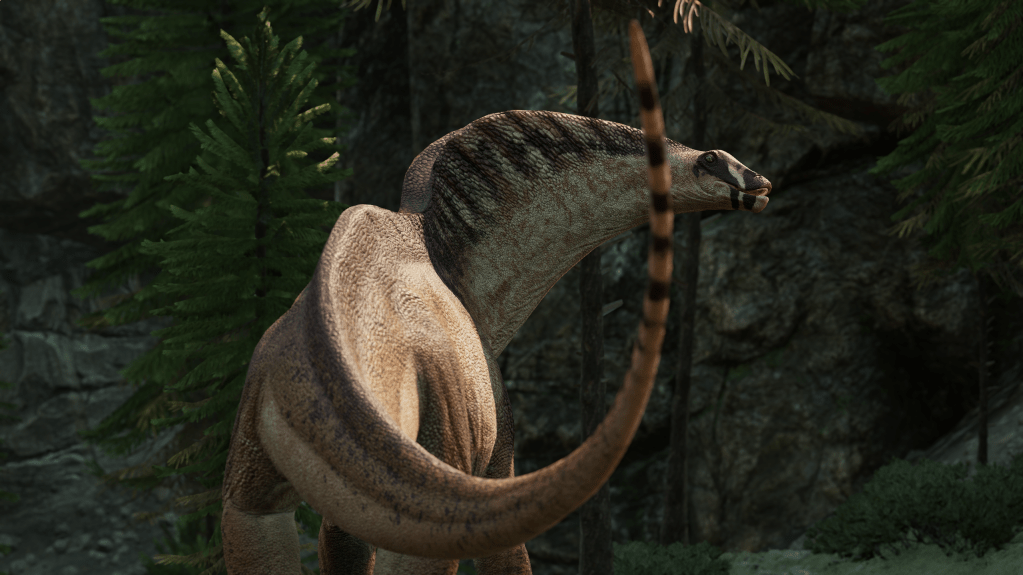
Amargasaurus lived during the Early Cretaceous period, approximately 129 to 122 million years ago, in what is now South America, primarily in Argentina. This medium-sized sauropod inhabited semi-arid floodplains with open areas and patches of vegetation, allowing it to browse for low- and mid-level plants. Its most distinctive feature, the double row of long spines along its neck and back, likely made it stand out in its environment while serving purposes such as display, defense, or thermoregulation. Amargasaurus would have lived in small herds, moving carefully through its habitat to find food, water, and safe nesting sites.
Tier: 4
Dimorphism: Males are typically brighter while females would be more muted tones or darker base colors with minimal bright colors.
Habitat : Cedrus Forest, Wollemi Forest, Redwoods, Blackfern Hills, Dryfang Canyon
Diet : Herbivore
Active Times: Amargasaurus are cathemeral, or active at different times throughout the day and night depending on factors like temperature and predator presence.
Group Size: 10 individuals
Defense: 3 individuals
Nesting Season: Spring and Summer
Offspring: Up to 5
Adoption: ✅
Behavior
Amargasaurus is a slow-moving, primarily diurnal herbivore that lives in small herds or family groups for protection and social interaction. It spends much of its day feeding on low- to mid-level vegetation, mainly consuming berries and fruit from shrubs and small trees. The tall spines along its neck are used for display, helping individuals recognize one another and attract mates during courtship. When faced with danger, Amargasaurus typically relies on group defense, vigilance, and its intimidating spines to discourage predators. It generally avoids direct confrontation with larger threats whenever possible, preferring to retreat or remain within the safety of the herd, but it is willing to stand its ground and confront smaller predators or rivals head-on when necessary.
Courting and Nesting
During courtship, Amargasaurus perform synchronized display behaviors raising their neck spines, circling, and staying in close rhythm with a potential mate. Completing these displays without interruption improves the chances of forming a successful bond. However, females are less receptive to males that move quickly between partners, showing divided attention or scouting for their next mate, and instead tend to favor those that remain focused and fully engaged in the display.
Once bonded, the female will leave to find a secluded nesting area, favoring locations with minimal foot traffic, or she may choose to nest near a large sauropod herd where the risk of predators is significantly lower.
Mandatory Traits
Spineguard Sociality
Amargasaurus typically travels in small herds of 5 to 10 individuals, including juveniles that are protected and guided by adults. These close-knit groups provide greater security from predators, improved foraging efficiency, and support social behaviors such as communication and courtship displays. Herd members remain in close proximity while moving through their environment, using their distinctive neck spines as visual signals to maintain group cohesion and reinforce social hierarchies. In addition to forming their own family groups, Amargasaurus is often found alongside other sauropod species in mixed herds, benefiting from the increased vigilance and protection that larger multi-species groups can provide.
Needle Guard
Amargasaurus is a formidable defender when threatened. When predators approach, the herd closes ranks immediately, surrounding vulnerable juveniles with a wall of adults. Their towering neck spines serve as a clear warning, but if an attacker ignores the display, the herd responds aggressively. Adults lash out with whip-like tails, drive predators back with powerful head strikes, and use their strong, muscular legs to deliver crushing stomps capable of injuring or driving off attackers. Multiple individuals coordinate their defense, presenting a united and dangerous front that few predators willingly challenge. While the herd prefers to avoid unnecessary battles with larger predators, they fiercely defend themselves and their young, using a combination of intimidation, force, and coordinated action to make any attack a costly gamble in the dangerous Early Cretaceous world.
Big-Saur Buddy
Amargasaurus shows a curious affinity for larger sauropods in its environment. Herds often keep close to these gentle giants, gaining protection from predators by using the bigger sauropods as natural shields. Younger Amargasaurus may particularly benefit, staying near massive sauropods to learn about food sources, predator avoidance, and social cues. While small in comparison, Amargasaurus seems unbothered by the size difference, treating larger species as companions and guardians, and possibly even following their feeding paths to find the juiciest berries and fruit.
Over time, this association can deepen beyond simple proximity. Rather than just trailing behind, Amargasaurus herds often integrate fully with larger sauropod groups, moving, feeding, and resting alongside them as a single, mixed herd. This blending of species creates a mutually beneficial dynamic. Amargasaurus gains consistent protection and guidance, while their alertness and mobility may help the larger herd detect threats sooner.
Optional Traits
Spiny Shuffle
Amargasaurus exhibits playful behavior, especially among juveniles and younger herd members. They engage in gentle wrestling with necks and tails, chasing each other through open areas, and using their spines and heads in mock sparring games to practice defensive and social skills. Play also strengthens social bonds within the herd, teaches important survival behaviors like coordination and predator awareness, and provides a way for juveniles to explore their environment safely. Even adults may occasionally participate in light displays or contests of strength, combining fun with training for real-world challenges.
Trailblazer
Amargasaurus displays a curious and exploratory behavior, often investigating unusual terrain, fallen logs, or rock formations in its environment. Juveniles are especially inquisitive, climbing small inclines or leaning over shrubs to reach hidden berries and fruit. This curiosity helps them learn about their surroundings, discover new food sources, and develop coordination and balance. Adults sometimes join in, using these moments to teach younger herd members about safe paths, hazards, and efficient foraging techniques.
Credits: Littlered
Sources: https://en.wikipedia.org/wiki/Amargasaurus https://www.ebsco.com/research-starters/anatomy-and-physiology/amargasaurus https://a-z-animals.com/animals/amargasaurus/
Last Updated: 6/24/2026
 Ashes of Apex Fantasy Realism