Cryolophosaurus
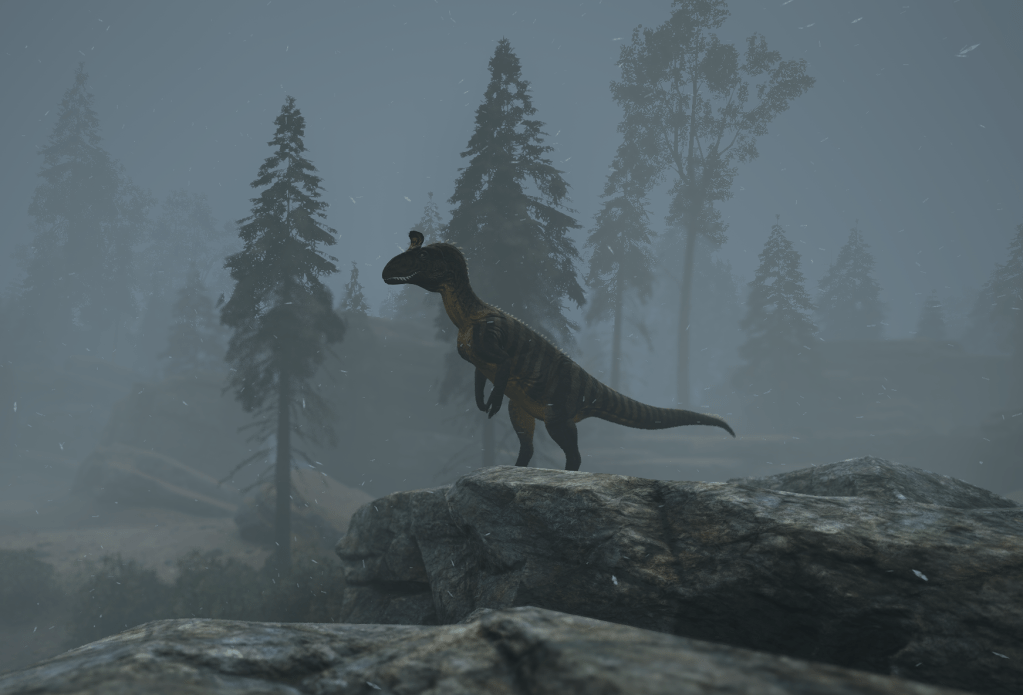
Cryolophosaurus was a large, carnivorous dinosaur from the Early Jurassic period, known for a distinctive fan-shaped crest on its skull and the ridged teeth protruding from its mouth. It lived approximately 190–170 million years ago in what is now Antarctica, and its name means “frozen crested lizard”. This predator was one of the largest theropods of its time, estimated to be 6–7 meters long and weighing around 4,500–4,650 lbs.
Tier: 3
Dimorphism: Males display blue-grey coloration and are also commonly seen with orange tones. Their crests are brighter and more pronounced. Females typically show green and red or brown and yellow patterning.
Habitat:
Riparia: Dry Fang Canyon, Steep Run
Gondwa: Young Grove, Dark Woods, Titan’s Pass
Diet: Carnivore
Active Times: Primarily dawn and dusk (crepuscular), with occasional midday activity when foraging or defending a nest.
Group Limit: 2 bonded males; up to 2 female mates, and offspring up to sub-adult age
Attackers/Defenders: 4 subadults/adults
Nesting: Winter
Offspring: up to 5
Adoption: ❌
Behavior
Cryolophosaurus carries itself with quiet confidence, appearing intimidating despite rarely seeking unnecessary conflict. It is a flexible and intelligent hunter, well-suited to surviving in the rugged terrain of mountainous regions. Its ability to adapt and rely on instinct plays an important role in its daily survival.
This dinosaur prefers patience over reckless pursuit. Cryolophosaurus often uses rocks, brush, and uneven terrain for cover, quietly observing its surroundings while waiting for the right moment to strike. It studies potential prey and chooses its opportunities carefully, weighing the effort of the hunt against the reward.
Cryolophosaurus is most comfortable alone, as solitude allows it to stalk prey more effectively. However, males may form partnerships with one another, traveling and hunting together when it benefits their survival. These alliances can eventually expand into temporary family groups once mates are found and offspring are raised.
Cryolophosaurus is also known to tolerate the presence of Dilophosaurus. In some regions, the two species move through the same territory, forming unusual but cooperative relationships that help them endure the demanding conditions of mountain life.
Cryolophosaurus do not form Flamekin bonds.
Courting
When Cryolophosaurus seeks a mate, bonded males may remain together as they search for partners. These bonds form only between males, and females do not form the same long-term partnerships. Each male displays his strength through posture, crest displays, and low vocal calls meant to draw the attention of nearby females. Rival males may circle and posture in brief contests of dominance, and may spar to test one another’s strength, though most encounters end once one male backs down.
If a female accepts the display, the pair begins traveling together and preparing for nesting. When both bonded males find mates, the pairs may remain together, forming a close family structure centered around cooperation, protection, and the survival of future young in the mountainous regions they call home.
As their offspring grow and become independent, the family structure gradually separates. Females typically leave and return to a solitary life after nesting, while the bonded males often remain together.
Nesting & Offspring
Cryolophosaurus choose sheltered areas within the mountains to build their nests, favoring locations that provide cover from wind, predators, and the elements. Rocky ledges, dense brush, or natural crevices are often used to protect eggs and newly hatched young.
Once hatched, the young begin traveling with the adults at an early age and are expected to learn quickly by observing them and adapting to the rugged terrain. Cryolophosaurus are not overly attentive parents, and their offspring must keep pace with the group as they move through the mountains. Those who fall behind or fail to adapt risk being left behind in the unforgiving environment they were born into.
As they mature, young Cryolophosaurus begin practicing hunts on smaller prey and may join the edges of hunts led by the adults. Feeding can become competitive, with siblings snapping and sparring at kills as they test their strength and confidence.
Through competition and experience in the harsh mountain terrain, the young gradually develop the instincts and skills needed to survive on their own. As they approach adulthood, they disperse to establish lives of their own, continuing the cycle of independence and the complex social bonds common among their kind.
Orphaned Behavior
Orphaned Cryolophosaurus are born with strong instincts and do not imprint on unrelated adults, relying entirely on their instincts to survive. Without the protection of adults, they become cautious and opportunistic, surviving on smaller prey or scavenged remains whenever possible. Many will struggle to endure the harsh mountain environment, and only the most adaptable young survive long enough to reach independence.
During their earliest stages of survival, they may scavenge from the fresh kills of other predators, but may take from the same kill no more than three times. Once they reach adolescence and grow stronger, Cryolophosaurus abandon this behavior and rely primarily on their own hunting abilities.
Mandatory Traits
You’re worth it, hopefully
Cryolophosaurus quietly observes and stalks potential prey as it determines what to hunt, carefully sizing up its options. Outside of the colder season, it hides in the shadows of trees, rocks, or bushes while keeping a safe distance from its target. Once it reaches about 40% hunger, it launches a sudden ambush.
Cooling instincts
During the colder seasons in the mountains, Cryolophosaurus becomes far more driven to hunt. When it reaches about 80% hunger, it will pursue nearly any prey it encounters, particularly smaller animals or those that appear weakened or vulnerable. During these moments, it relies on raw hunting instinct rather than careful planning. A lone Cryolophosaurus typically avoids prey large enough to pose a serious danger unless the animal is clearly weakened, such as bearing visible death scars. When traveling with other Cryolophosaurus, however, they may show greater confidence and challenge larger prey if the risk appears manageable.
The Frostfang Pact
This agreement emphasizes cooperation and mutual survival between Cryolophosaurus and Dilophosaurus. Though different in size and hunting style, the two species sometimes travel together, forming an unusual alliance that helps them endure the difficult conditions of the mountains.
Up to 2 Cryolophosaurus may travel alongside up to 5 Dilophosaurus as they roam the land. The Dilophosaurus act as watchful companions and scouts, while the Cryolophosaurus provide the strength needed to bring down larger prey.
During the winter season, the Cryolophosaurus become the primary hunters for the group. Dilophosaurus are less suited to the harsher mountain weather and deep snow, so they rely on their larger allies to secure food during these periods.
Cryolophosaurus will hunt when two Dilophosaurus reach 30% hunger, or when the Cryolophosaurus themselves reach 40% hunger. During the winter season, only the Cryolophosaurus may hunt for the group. If outside of the winter season, 2 Cryo and 2 Dilo may hunt together.
Warden and Whisper
As part of the Frostfang Pact, Cryolophosaurus listen for the alerting trills and signals of the Dilophosaurus within their group. When the Dilophosaurus react to movement ahead, the Cryolophosaurus follow these calls to investigate, trusting the smaller scouts to guide them toward prey or opportunity.
Bonded Brothers
Two male Cryolophosaurus may form a lasting partnership before seeking mates, traveling and hunting together as the core of a future group. When each male finds a partner, the pair may remain together and raise offspring, forming a tight-knit family that continues to roam and hunt in coordination. Additional members are typically offspring or relatives of the bonded pairs.
Crestbound Kinship
When a Cryolophosaurus is alone, it may encounter Dilophosaurus and choose to respect their presence. Rather than attacking the smaller crested dinosaur, it often avoids unnecessary conflict. These encounters sometimes lead to a quiet tolerance between the two species, allowing them to travel near one another without hostility.
Optional Traits
Daughters of the Ridge
Female Cryolophosaurus may briefly tolerate the presence of their adult female offspring after they reach maturity. During this time, mothers and daughters may travel together while the younger females learn to navigate the territory on their own. These gatherings remain small and temporary, as Cryolophosaurus are naturally independent hunters.
On rare occasions, an unrelated female may be allowed within the group for a short time, often due to shared travel routes or temporary abundance of food. If tensions rise or food becomes scarce, the outsider is quickly driven away. No more than four females in total may be present under this tolerance.
Please, no more zoomies!
Cryolophosaurus can tolerate Dilophosaurus running around them while they are resting or sitting still, but only for a short time. Eventually, the Cryolophosaurus become annoyed and signal for the Dilophosaurus to quiet down. Occasionally, young Cryolophosaurus may even join in the playful chaos.
Snow Blanket
During colder weather, Cryolophosaurus may lie still for a time, allowing snow to gather over its scales. This brief moment of stillness helps it remain calm before its instincts drive it back to action.
Credits: Spook & MisslilBlue
Inspiration: A mountain predator with the opportunistic feeding habits of a Tasmanian devil and the scouting partnership dynamic of wolves and ravens.
Sources:
https://nationalzoo.si.edu/animals/tasmanian-devil
https://it.wikipedia.org/wiki/Cryolophosaurus_ellioti
https://www.nps.gov/yell/learn/nature/raven.htm
https://en.wikipedia.org/wiki/Arctic_wolf
Last Updated: 3/15/26
 Ashes of Apex Fantasy Realism