Deltadromeus
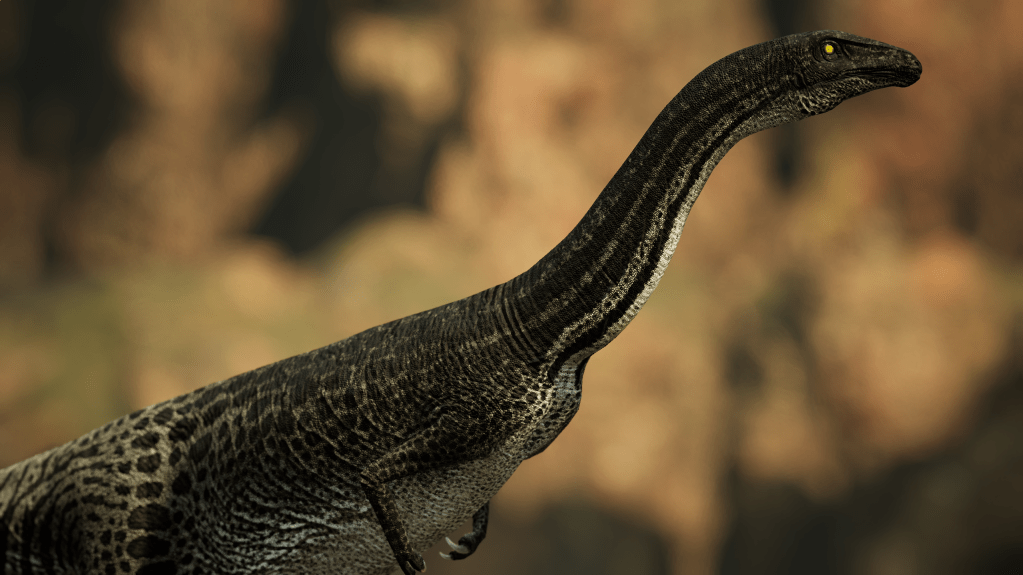
Deltadromeus agilis was a theropod dinosaur that lived approximately 100 to 95 million years ago, in what is now Morocco. It is estimated to have been around 26 feet in length, over 8 feet tall, and weighed just over 1 ton. Deltadromeus is believed to have occupied vast tidal flats and river deltas, and evidence suggests it may have been opportunistically omnivorous. This dinosaur was extremely thin with long, slender legs, allowing it to reach speeds of 25-30 miles per hour. Though its exact niche is the subject of debate among researchers, it survived and coexisted with massive predatory dinosaurs such as the Carcharodontus and Spinosaurus, making it incredibly adaptable and well-suited for its environment.
Tier: 2
Dimorphism: none
Habitat: Delatdromeus prefer to nest along river banks and sand bars in habitats with river channels and estuarine environments.
Diet: Omnivore
Active Times: Diurnal, but can adapt to a Flamekin companion’s active times.
Group Size: 8 total group members including offspring
Defense: 6 adults/sub-adults
Nesting Season: Spring & Summer
Offspring: Up to 5
Adoption: ✅
Behavior
Deltadeomeus is a social, home-ranging dinosaur that is known for its excitable and curious nature. They are highly reactive and often lack awareness of their surroundings. They travel in noisy, disorderly groups and are notably vocal, frequently calling out to one another regardless of the predator presence. Their poor coordination often results in stumbling and collisions as they move through their habitat.
Despite their ungainly behavior, Deltradromeus have little to no issue finding food. They are opportunistic omnivores and effective foragers that will eat plant material as well as smaller animals that can be chased down and killed with ease.
Deltadromeus are known to gather in large numbers, forming groups called “flocks” that travel and forage together. Within these groups, the social hierarchy is determined by age and experience, with the older members taking the lead and directing the group’s movement. Younger individuals may be less mature and more inclined to investigate unfamiliar creatures before fleeing, which could result in the injury or death of said individual.
Deltadromeus form long-term pair bonds that tend to persist for life. To find a mate, Deltadromeus must first seek out others of its own kind to form a flock with. These flocks offer protection in numbers, as individuals pair off and begin to prepare for nesting. Males and females may offer each other gifts of berries or meat to establish and maintain their bond.
Nesting
Mated pairs strongly prefer hidden nesting areas with nearby escape routes and access to water. Nests are established with dense foliage along ridges where the surrounding terrain can provide some concealment. They are highly protective of their nesting area and behave aggressively toward unfamiliar creatures. Even while resting, Deltadromeus remain highly alert and are commonly seen sleeping upright so they can react quickly to nearby movement or danger.
Nesting is communal, with the males taking to watching over the group, scanning constantly for any potential threats, while the females prepare their nesting sites and gather resources for their hatchlings. This group structure ensures the safety of all future young, as they are highly vulnerable to predation.
Offspring
Deltadromeus offspring hatch extremely fragile and heavily dependent on parental protection. They are born blind and immobile until reaching the juvenile stage. Upon hatching, players must use the /bind 10 command. Because they cannot see, hatchlings are extremely vocal, communicating their wants and complaints almost constantly through groans, grunts, and the occasional distress call.
Once their vision develops, young Deltadromeus slowly begin exploring the surrounding area, foraging primarily on berries due to how easy they are to reach and consume, following adults closely, and investigating nearby movement out of curiosity. Juveniles rarely stray far from their parents and instinctively bunch together beside larger flock members when startled or uncertain.
As they mature into adolescence, Delta become far more energetic, troublesome, and difficult to manage. Adolescents frequently chase one another, steal food from siblings, and wander from the group out of curiosity before quickly rushing back to the safety of the flock. Adults guide wandering young back toward the group and maintain close supervision around water and unfamiliar creatures.
Sub-adult Deltadromeus begin participating more actively in flock behavior and opportunistic hunting. At this stage, they closely mimic adult mannerisms, feeding habits, displays, and scavenging behavior while remaining socially dependent on the flock. Even near maturity, younger individuals rarely travel alone for extended periods and commonly shadow older members during migration, feeding, and rest.
Orphaned Deltadromeus struggle heavily without the structure and security of a flock. Hatchlings rarely survive long alone. Unable to see or move on their own, they instinctively vocalize constantly in an attempt to call flock members to them. Juveniles commonly shadow unfamiliar creatures from a distance and vocalize excessively in search of companionship.
Orphans are more likely to wander into danger and make poor survival decisions out of curiosity and social dependency. Blind hatchlings imprint on the sounds of creatures that linger nearby during their vulnerable early development, while juveniles form attachments to creatures that provide food and social interaction. As they mature into adolescence, the imprint gradually weakens as their natural curiosity, independence, and flock-oriented instincts begin to take over. By the time they are sub-adult, they separate from the creature they’ve imprinted on and begin fully integrating into flock behavior.
Mandatory Traits:
Little Thief
When hunger and opportunity align, unattended offspring and other small, vulnerable creatures are tempting targets and may be snatched away. Deltadromeus prefer quick opportunistic grabs and poorly guarded nests over dangerous fights with large, healthy adults.
Fish Bribery
Regular fish offerings establish an uneasy truce along shared shorelines with Austroraptor. As long as fish continue to be provided, Deltadromeus leave the local Austroraptor and their offspring unharmed. However, once one or more Deltadromeus reach 30% hunger or lower, those individuals may abandon the arrangement and hunt Austroraptor or their offspring.
- Only individual Delta at or below 30% hunger may engage or hunt Austro or their offspring while this arrangement is active. Other flock members must continue to honor the arrangement unless they also naturally fall below the hunger threshold.
Eyes Open
Deltadromeus become more lively and active when in a flock of 3 or more individuals. The constant noise and activity of these groups frequently attracts the attention of larger predators, causing the members to become highly reactive. Designated defenders will alert call after sensing a threat, seeing a predator, or hearing heavy footsteps, communicating the danger to the rest of the flock and sending them scattering to hide in foliage, caves, or to flee the area entirely.
Nest Raiders
Deltadromeus are known to linger around active nesting sites in hopes of stealing an unattended hatchling. Rather than directly confronting healthy parents, Deltadromeus pressure the family with persistent noise and constant harassment to wear them down over time. Their presence places stress on the nesting creatures, causing their hunger drain to accelerate, eventually forcing them to leave the area to forage or hunt. Once they have an opening, Delta may rush in to snatch vulnerable offspring before returning to the safety of the flock.
Optional Traits:
Ignorance is Bliss
Deltadromeus are known to easily form Flamekin bonds with larger carnivores, though they are not necessarily looking for protection. Because of their general lack of awareness, solitary or wandering Deltadromeus may approach and “befriend” large predators simply because they enjoy the company. It is believed that Deltadromeus instinctively seeks the comfort of a flock, and so they see virtually any theropod (Tier 3 or larger) as a potential companion.
- Delta can use their group abilities in and out of combat and may defend, scout for, track prey, and alert the creature they have bonded with to approaching danger.. They do not initiate combat for their companion.
- Delta may group with semi-aquatics Tier 3 or larger
Summertime Soak
During warm weather or seasonal heat, Delta spend time soaking in shallow water, lounging near riverbanks, or resting among the flowers and wet vegetation to cool themselves. Entire flocks may gather lazily along shorelines during the hottest parts of the day.
Storm Runners
While raining or during storms, Deltadromeus become more socially active and seem to move in bursts of increased speed. Juveniles and adolescents are especially excitable during poor weather and may become distracted, noisy, or difficult for adults to manage.
Credits: Onlooker, Onyxmoon, MisslilBlue
Sources: https://en.wikipedia.org/wiki/Deltadromeus
https://youtu.be/qGmmi_d_6Kc?si=Y1OFzjqZtALFdA4x
Last updated: 5/26/26

