Dimetrodon Milleri
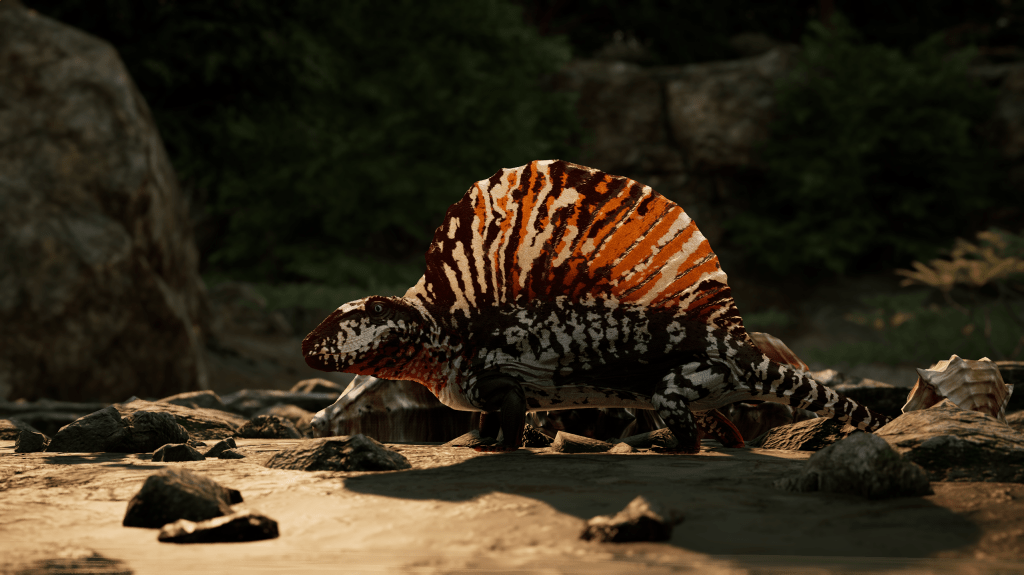
Dimetrodon milleri is an early, small species of Dimetrodon, an extinct mammal-like reptile that lived around 300 million years ago. It was among the smallest Dimetrodon species, reaching about 6.5 feet in length, and is known for the sail on its back. It is thought to have been used for temperature regulation or sexual display. They are opportunistic, munching on Meat, Noxious Meat, as well as insects, mollusks, and crustaceans. They tend to eat a more Insectivore diet as they get older.
Tier: 1
Dimorphism: None
Habitat: Can be found nesting anywhere in Riparia or Gondwa.
Diet: Carnivore
Active Times: Diurnal, meaning they are active during the day and sleep at night. Their activity cycle involves waking up to bask in the morning, becoming more active for hunting and exploring throughout the day, and then resting as night falls
Group Size: 10 Sub-Adult / Adults, 5 offspring (Can be increased to 12 Adults with certain roles)
Attackers/Defenders: 8 individuals
Nesting Season: Spring
Offspring: Up to 5
Adoption: ✅
Behavior
Dimetrodon Milleri are primarily solitary and highly territorial, especially the males, and they prefer to keep to themselves unless seeking a mate. In social environments, however, they tend to remain unexpectedly calm as long as no threat is present. They are most often found at the edges of cliffs, perched on high ground, or staying close to their direct family.
When paired for nesting or when gathered in larger groups, Dimetrodon Milleri form colonies with a defined social structure. These colonies follow a strict hierarchy, usually led by a dominant male, who maintains order, oversees territory boundaries, and directs the colony’s movement and safety.
Milleri do not flamekin for higher-tier carnivores when grouped with a Grandis.
Mandatory Traits
Vibes = Not so Good
When threatened, a Dimetrodon Milleri immediately shifts from calm to combative. It relies on quick bursts of speed, sharp bites, and forceful tail lashes to defend itself. During courtship or while protecting a nest, this intensity escalates into a series of bold display behaviors, including head-bobbing, biting the air, and push-ups. These visual signals are meant to intimidate rivals, warn off intruders, and prove dominance before any physical clash occurs.
Top of the Sail
When joining or forming a group of Dimetrodons, any incoming male must challenge the current Dominant Male. This spar is fought until one combatant reaches 25% health or until death, depending on which condition both players agree to beforehand. If the group has no existing leader, the challenger may claim the Dominant position immediately.
- Only sub-adults and adults may challenge for leadership. Nested-in juveniles or younger individuals must wait until they reach sub-adult before issuing a challenge.
A full Dimetrodon group consists of up to five males in total, including the Dominant Male, and up to two females. The Dominant Male serves as the leader of the entire group. Most group decisions must go through him, including permissions for other males to nest with females. This rule prevents accidental inbreeding and maintains the hierarchy that keeps the colony stable.
Burrowed Courtship
Mating takes place only in the spring season. Males court females by performing slow, rhythmic head-bobbing displays, using posture and movement rather than aggression to win a mate. Once receptive, females seek out sandy ground where they can dig deep subterranean nests. Many will join other females in shared burrows, creating communal nesting tunnels that provide warmth, shelter from predators, and a stable microclimate for egg development.
During this period, the normally solitary adults become far more tolerant of one another. Temporary nesting groups form around these burrow systems and remain loosely connected until the young reach sub-adult. At that point, each juvenile must choose to either challenge the Dominant Male for a place in the hierarchy or disperse to establish territory and form their own group elsewhere.
Optional Traits
Crested Greetings
Although Dimetrodon milleri and Dimetrodon grandis are distinct species, their shared lineage shows in how they acknowledge one another. When they meet, both raise and angle their sails in a calm visual display that acts as a non-aggressive greeting. The smaller Milleri often circles slowly or gives a low rumbling hiss to signal respect, while the larger Grandis answers with steady, deliberate stillness, acknowledging the gesture without inviting conflict.
These ritualized exchanges allow the two species to coexist briefly at waterholes or basking sites. The gatherings that form are loose and short-lived, built on mutual recognition rather than cooperation, and dissolve as soon as the immediate need for space or resources ends.
Credits: IveMcFallen
Sources:
https://www.inaturalist.org/taxa/32860-Trioceros-cristatus
https://en.wikipedia.org/wiki/Ctenosaura_melanosterna
https://en.wikipedia.org/wiki/Dimetrodon
Last Updated: 11/21/25

