Iguanodon
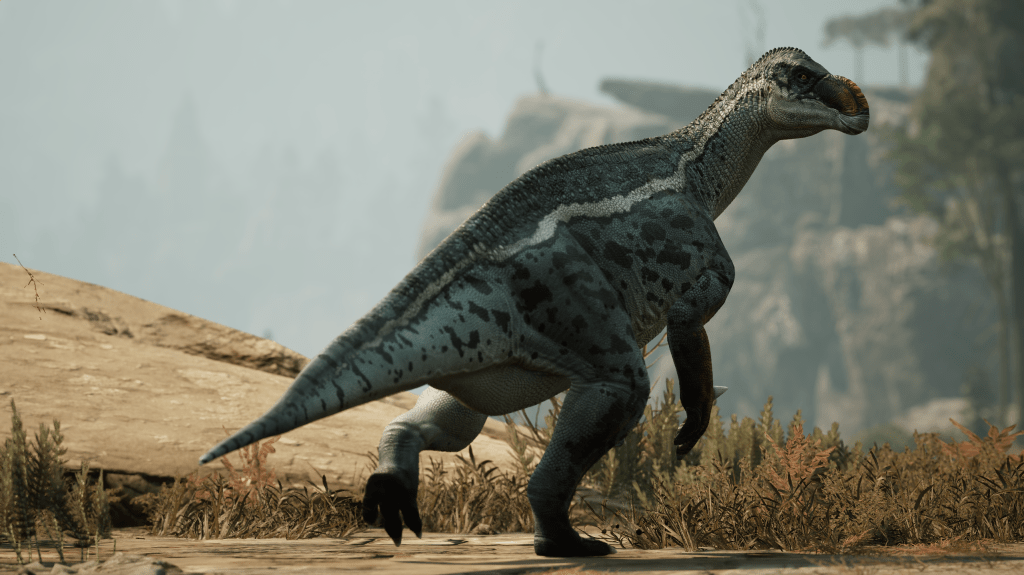
Iguanodon was a large, plant-eating dinosaur from the Early Cretaceous, known for its distinctive thumb spikes used for defense against predators. Typically walking on all fours but capable of bipedal movement, it could reach lengths of 9–10 meters and weigh several tons. Iguanodon lived in herds for protection and social interaction, often moving together to graze on ferns, cycads, and conifers. Juveniles stayed within the herd, learning safe foraging routes and social behavior from older members. Its keen sense of smell and vision helped it detect predators early, while the powerful thumb spikes could slash or jab attackers if escape wasn’t possible. Iguanodons’ behavior shows a balance of herding, foraging efficiency, and defensive adaptations, making it a well-rounded herbivore of the Early Cretaceous.
Tier: 4
Dimorphism: Male Iguanodons typically display brighter, more aggressive colors such as reds and yellows. Females, on the other hand, tend to have calmer, mellower tones like blues, greens, and purples.
Habitat: East Passage, Wollemi Forest
Diet: Herbivore
Active Time: Iguanodons are cathemeral, meaning they were active at various times throughout the day and night. They grazed, moved with the herd, and remained alert for predators in both daylight and low-light conditions, adjusting activity based on food availability and threat levels.
Group Size: Unlimited
Defense: 3 adults
Nesting Season: Spring and Summer
Offspring: Up to 5
Adoption: ✅
Iguanodons do group with other herbivores, primarily hadrosaurs, but they refuse to have flamekins
Behavior
Iguanodons are social, herd-dwelling herbivores with complex behaviors. When threatened, they rely on herd cohesion for safety. Males patrol perimeters and can confront predators, using size, strength, and group intimidation, while females become hyper-aggressive if juveniles are attacked. Their keen senses of smell and vision allow early detection of threats, and herd members coordinate flight or defensive displays as needed.
Courting and Nesting
Males display bright colors and dominance behaviors to attract females, including posturing, vocalizations, and occasional gentle nudges or shoves. They also engage in sparring matches, clashing and pushing against one another to demonstrate strength and stamina. The strongest males are often selected not only as preferred mates but also as defenders of the herd. Females lay eggs in carefully chosen, protected areas, often returning to the same sites year after year. They show parental vigilance, staying nearby or in visual contact with nests to deter predators and protect the young.
Mandatory Traits
Soulmates
Iguanodons are believed to mate for life, forming strong pair bonds that persist across multiple breeding seasons. Despite their long-term commitment, they can be extremely selective when choosing a partner, assessing potential mates based on size, strength, color displays, vocalizations, and overall health. Once a pair forms, they remain close within the herd, coordinating movements, foraging, and defending their young together. Their selective nature ensures that only the fittest and most compatible individuals contribute to the next generation, strengthening the herd’s overall genetic health and stability.
Predator’s Reckoning
Iguanodon herds can grow to immense sizes, spreading across wide grazing grounds while remaining loosely coordinated for safety. Their primary defense is handled by a small group of dominant individuals either three males, or two males accompanied by a single brightly colored, highly aggressive female. These defenders patrol the herd’s perimeter, confronting predators with strength, intimidation, and coordinated displays.
Despite this structured defense, the protection of juveniles is shared among the herd. At any sign of danger, nearby females become fiercely aggressive, rushing to drive off threats and shield the vulnerable. Even after a predator retreats, these females remain on high alert, carefully scanning their surroundings before gradually returning to normal behavior. This combination of dedicated primary defenders and the instinctive vigilance of the females ensures the survival of both the herd and its next generation.
Nomadic Foragers
Iguanodons are highly mobile and frequently move across their territory in search of fresh vegetation, ensuring the herd always has access to sufficient food. This movement slows during the spring, when the young are hatching, as the herd prioritizes protecting nests and guiding juveniles safely. Outside of this period, constant relocation helps reduce overgrazing, allows herds to exploit seasonal resources, and exposes predators to early detection, keeping both adults and young safer.
Ew! Stinky Torvo
Iguanodons exhibit strong hostility toward Torvosaurus, reacting aggressively whenever one enters their line of sight. They often bellow loudly, broadcasting warnings to the rest of the herd and attempting to intimidate or drive off the predator before it approaches too closely. This behavior helps protect both adults and juveniles, maintaining herd cohesion and alerting nearby allies or coexisting species, such as Daspletosaurus, to the threat.
Optional Traits
Sentinel Pact
Iguanodons have been observed tolerating and coexisting with Daspletosaurus in certain areas, treating them as auxiliary guardians for the herd. A family of Daspletosaurus will patrol nearby while the Iguanodons graze, providing extra protection and deterring predators. While adult Iguanodons do not tolerate the Daspletosaurus approaching their young, they allow the juvenile Daspletosaurus and young Iguanodons to interact, fostering social bonds that may strengthen interspecies cooperation in the future. This arrangement benefits both species: the Daspletosaurus gain early warnings of danger (food), and the Iguanodons receive additional vigilance without compromising the safety of their offspring.
Tiny Titans
After adults finish sparring or engaging in battles, juvenile Iguanodons often mimic the action, playfully sparring with one another in imitation of their elders. Using nudges, pushes, and gentle shoves, the young practice strength, coordination, and social skills in a safe environment. This playful behavior not only entertains the herd but also prepares the juveniles for future challenges, reinforcing lessons learned from watching the adults in action.
Adoptive Matron
Female Iguanodons that have been unable to hatch their own eggs often adopt lone or orphaned juveniles, caring for them as if they were their own. These adoptive mothers provide protection, guidance, and teaching, helping the young integrate into the herd. This behavior ensures vulnerable juveniles have a higher chance of survival while giving females an opportunity to exercise their maternal instincts, strengthening social bonds within the herd.
Shallow Soakers
Iguanodons enjoy lying in the shallow waters of streams and ponds, using the cool water to regulate body temperature and relax while staying alert. They deliberately avoid deep water, aware that danger lurks in the murky depths. By keeping to shallow areas, they can soak safely while maintaining clear visibility of their surroundings, allowing them to detect predators early and remain in control of their environment.
Credits: Litlered
Sources:
https://en.wikipedia.org/wiki/Iguanodon https://path-of-titans.fandom.com/wiki/Iguanodon
Last Updated: 12/1/2025
 Ashes of Apex Fantasy Realism