Kentrosaurus
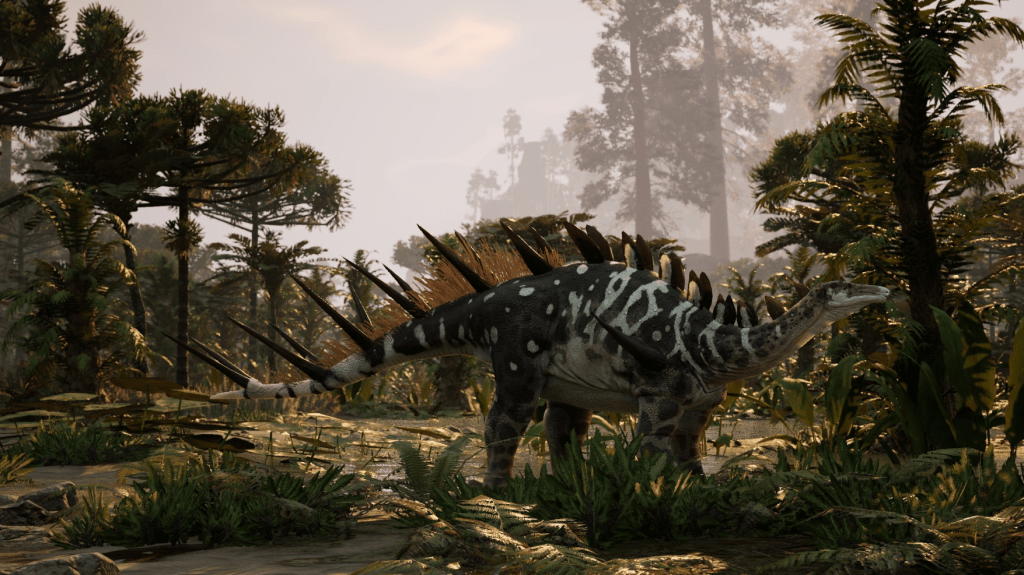
Kentrosaurus lived during the Late Jurassic period, around 155 to 150 million years ago, in what is now Tanzania, Africa. At that time, this region was part of a warm, semi-arid environment with open woodlands and floodplains, providing abundant low-growing vegetation for these herbivorous dinosaurs to feed on. Kentrosaurus shared its habitat with other dinosaurs and prehistoric animals, navigating the landscape with its distinctive rows of plates and defensive tail spikes.
Tier: 2
Dimorphism: None
Habitat: Dry Fang Canyon, Cedrus Forest
Diet: Herbivore
Active Times: Kentrosaurus, like many herbivorous dinosaurs, is diurnal, meaning it is active during the day. Its spikes and tail defenses suggests it relies on physical protection rather than hiding, which fits with a daytime grazing lifestyle in open habitats.
Group Size: 8 individuals
Defense: 4 adults
Nesting Season: Spring and Summer
Offspring: Up to 5
Adoption: ✅
Behavior
Kentrosaurus is a small, spiky‑backed herbivore that grazes on low vegetation in open woodlands and floodplains, moving in small groups of eight at least for safety. When threatened by predators, Kentro utilizes its tail spikes (the “thagomizer”) and hip spikes for defense, swinging its tail or bracing its sides to discourage attacks. When defending the herd four adults will engage in the fight but if someone that’s not defending gets attacked they are allowed to defend themselves but they can’t chase after the predator since they are they are not a herd defender.
Courting and Nesting
During courtship, Kentrosaurus uses the spikes and plates along its back as striking display features to attract potential mates. While these visual displays play a key role, some pairs form more gradually, starting out as migration companions and developing into bonded mates through shared survival and time spent together.
When nesting, females seek out heavily wooded areas or dense brush, using the environment to conceal their shallow ground nests from predators. Once the hatchlings are strong enough to move, they leave the nesting site rather than remain in one place, reducing the risk of drawing attention from nearby threats.
Mandatory Behavior
Hit‑and‑Prick
Kentrosaurus is a hit-and-run bleed specialist, using tail attacks and spiked defenses to wear down enemies over time. It relies on mobility and positioning to strike, retreat, and avoid direct hits, making it strongest in prolonged fights or when paired with other stegosaurus. Its success comes from picking battles wisely and leveraging both offensive and defensive spikes to keep pressure on opponents.
Prickly Peace
Kentrosaurus has peaceful interactions with other herbivores, grazing alongside them while maintaining a safe distance. Its defensive spikes and tail are used more for protection than aggression, so it avoids conflicts unless directly threatened. In mixed-species groups, Kentrosaurus benefits from the vigilance of other herbivores, helping detect predators and avoid danger together.
Trail of Greens
Kentrosaurus relies on territory exploration and resource tracking as a key survival behavior. Being a herbivore, it must regularly traverse its environment to locate enough food and water while staying alert for predators. This involves knowing safe routes, identifying productive grazing spots, and potentially following seasonal movement patterns in its habitat. This behavior is vital—without it, the dinosaur’s chances of survival are greatly reduced.
Optional Behavior
Spiky Games
This behavior involves Kentrosaurus engaging in light, playful sparring or tail flicking with other members of its group. It’s a way for juveniles to practice coordination and for adults to build social bonds, all while keeping the mood light and fun. It also includes chasing and darting around one another, helping strengthen agility and reflexes in a low-risk environment.
Shadow Chase
As the sun sets, young Kentrosaurus gather together and playfully chase the shifting shadows cast by their plates and tails. They flick their tails at the ground and at each other in quick, energetic bursts, sometimes spinning in circles as they try to “catch” the moving shapes. Occasionally, adults may stand nearby, watching over the playful group or even joining in with gentle tail sways, turning the fading light into a brief moment of fun before nightfall.
Big Buddy Energy
Kentrosaurus will sometimes approach much larger herbivores with non-aggressive intent, offering small gifts such as berries, melons, and flowers. This behavior is a form of social bonding, used to reduce hostility and increase the chance of being accepted into nearby herds. If successful, these interactions may lead to temporary or long-term association with the larger species, improving safety and access to shared grazing areas. If accepted, Kentrosaurus will take on a supportive role within the herd, acting as an early-warning scout by alerting larger companions to nearby threats or disturbances. In rare cases, if a herd member shows signs of severe injury or vulnerability, Kentrosaurus may become unusually protective, even attempting to defend them directly. On occasion, individuals have been observed stepping in to absorb or distract from attacks aimed at their larger herd mates, prioritizing the survival of the group over their own safety.
Credits: Littlered
Sources:
https://en.wikipedia.org/wiki/Kentrosaurus
https://www.ebsco.com/research-starters/earth-and-atmospheric-sciences/kentrosaurus https://lewisrhystwiby.wordpress.com/2021/11/21/paleo-profiles-kentrosaurus/
Last updated: 4/13/2026

