Lurdusaurus
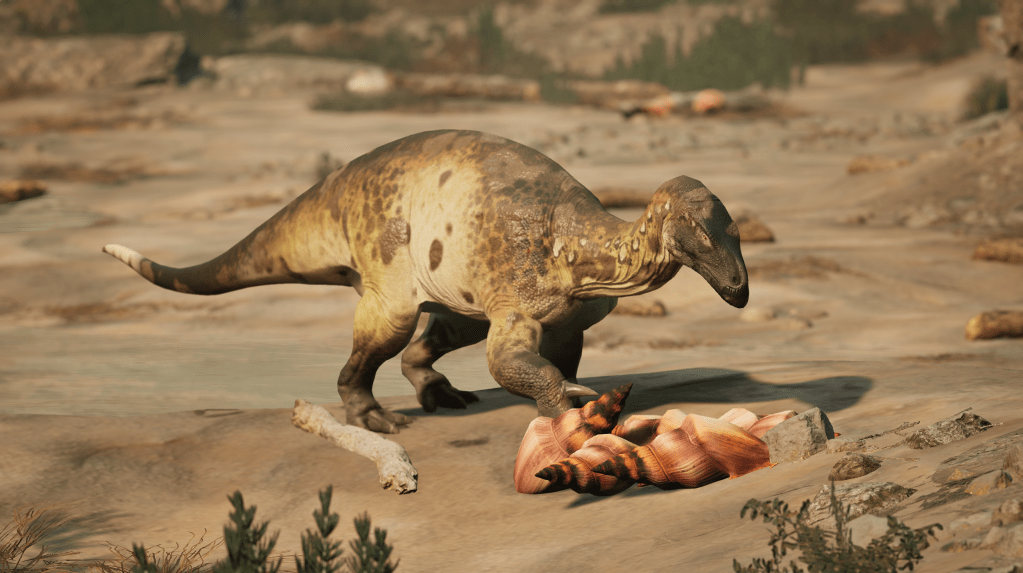
Lurdusaurus lived during the Late Cretaceous period, around 70 to 80 million years ago, in what is now northern Africa. Fossils of this relatively little-known theropod have been discovered in the Kem Kem Beds, a region in Morocco that was once part of a vast, arid river system. The landscape during this time was dominated by rocky deserts and dry riverbeds, with occasional lush oases and floodplains.
Lurdusaurus roamed these semi-arid environments, where it likely navigated the uneven terrain and rocky outcrops in search of food. The region, which was home to a variety of large theropods and early mammals, would have been a dangerous and competitive place, requiring Lurdusaurus to rely on its stealth and strength rather than speed. Though it shared the landscape with some of the Cretaceous period’s most fearsome predators, Lurdusaurus was well-adapted to its environment, using its bulk and slow, deliberate movements to survive.
Tier: 3
Dimorphism: None
Habitat: East Passage, Wollemi Forest
Diet: Herbivore
Active Times: Lurdusaurus is crepuscular, active during the dawn and dusk hours.
Group Size: 2-4 adults and their offpsring
Defense: 4 adults
Nesting Season: Spring and Summer
Offspring: Up to 5
Adoption: ✅
Behavior
Lurdusaurus is a slow-moving, cautious theropod that likely engages in solitary or small-group behaviors. During the mating season, males perform simple displays, such as raising their frills or limbs to attract females. Nesting occurs in sheltered, secluded areas like rocky outcrops or among dense vegetation, where eggs are hidden in shallow, well-protected nests to avoid detection by predators. When it comes to predators, Lurdusaurus relies on stealth and the cover of its environment to avoid conflict. Rather than relying on speed, it uses its bulk and strength for defense, adopting defensive postures if threatened. If pursued, it retreats into crevices or caves, using its low profile and the terrain to hide from larger predators, and it likely seeks safety in numbers if in a group. Its slow, deliberate movements make it a creature of caution, preferring to avoid danger rather than face it head-on.
Mandatory Traits
The Silent Mirage
Lurdusaurus becomes still and blends perfectly into its surroundings when danger approaches, creating a “mirage” of nothingness. In this moment, it is as if it vanishes, becoming invisible to the predators nearby. It waits in eerie silence, hoping to avoid detection, before deciding whether to flee or stand its ground.
The Dune’s Embrace
During the scorching heat of midday, Lurdusaurus seeks refuge from the burning sun, retreating into the water or possibly the shade of rock formations or the cool embrace of caves. Here, it rests in a state of near immobility, conserving energy until the temperature drops and the land cools. This midday lethargy is a defense against the harsh environment, allowing it to avoid predators and avoid tiring itself out in the heat.
The Hidden Nook
Rather than nesting within the main herd, Lurdusaurus chooses to establish a nesting site away from the group, accompanied only by its chosen mate. These secluded locations, tucked beneath the shelter of rocky outcrops or hidden deep within dense vegetation, provide safety and peace during the critical nesting period. By distancing itself from the rest of the herd, Lurdusaurus ensures its eggs are protected from the prying eyes of predators, while also minimizing the risk of territorial conflicts with other members of the herd.
The Desert Song
During courtship, Lurdusaurus performs low, rumbling calls that resonate across the desert, signaling its presence to potential mates. These calls are not loud enough to attract unwanted predators, but they carry just far enough to reach the ears of females during the twilight hours when the desert is most alive. This ritual is subtle but essential, marking the beginning of the mating season and the continuation of the species in the harsh, unforgiving environment.
Optional Traits
The Shell Seeker
Lurdusaurus has a peculiar habit of diving into shallow pools or streams in search of the prettiest, most colorful shells they can find. When they spot a particularly vibrant shell resting on the riverbed, they’ll plunge beneath the surface to snatch it up, proudly carrying it to the shore. Though this behavior seems to be a form of play or display, it’s a way for them to test their swimming ability and coordination in the water. Sometimes, Lurdusaurus even gathers a small collection of these shells, displaying them near their resting spots or by the water’s edge, as if to show off their treasures to others of their kind.
The Shallow Seeker
Young Lurdusaurus are drawn to the shallows of streams or pools, where they engage in curious exploration. They splash in the water, testing the flow with their feet and observing the movements of smaller creatures in the shallows. This behavior helps them develop coordination and balance while offering an early introduction to their future role as foragers and water users. It also keeps them close to the safety of their chosen water sources.
The Water’s Veil
Lurdusaurus juveniles love to engage in a game of hide-and-seek among the dense water plants growing in shallow pools or streams. They’ll sneak beneath the thick mats of reeds or lily pads, blending in with the surrounding vegetation to hide from their playmates. The young ones take turns hiding and seeking, using the swaying water plants to conceal themselves as they wait for others to find them. This game helps them practice stealth and patience, while also refining their ability to move quietly through their environment. The playful nature of this trait encourages social bonding and gives them a chance to refine skills they’ll later use in the wild, like evading predators or stalking prey.
The Quartet of Unity
Lurdusaurus are typically found in small groups of four, but these groups are almost always made up of two bonded mating pairs. When not part of a group, they are either alone, actively searching for a mate, or exclusively paired with their chosen partner. These small, tight-knit groups allow for mutual protection, where each pair looks out for each other’s young, ensuring their survival in the harsh desert environment. When alone, Lurdusaurus may roam the landscape seeking a mate, but once they’ve bonded, they remain inseparable, rarely straying far from one another. The social structure promotes strong family bonds, with each pair remaining dedicated to the other, working together to protect, forage, and raise the next generation in the wild.
Credits: Littlered
Sources:
https://en.wikipedia.org/wiki/Lurdusaurus https://eartharchives.org/articles/lurdusaurus-river-dinosaur-of-the-ancient-sahara/index.html
Last updated: 11/23/2025
 Ashes of Apex Fantasy Realism