Madrehorn
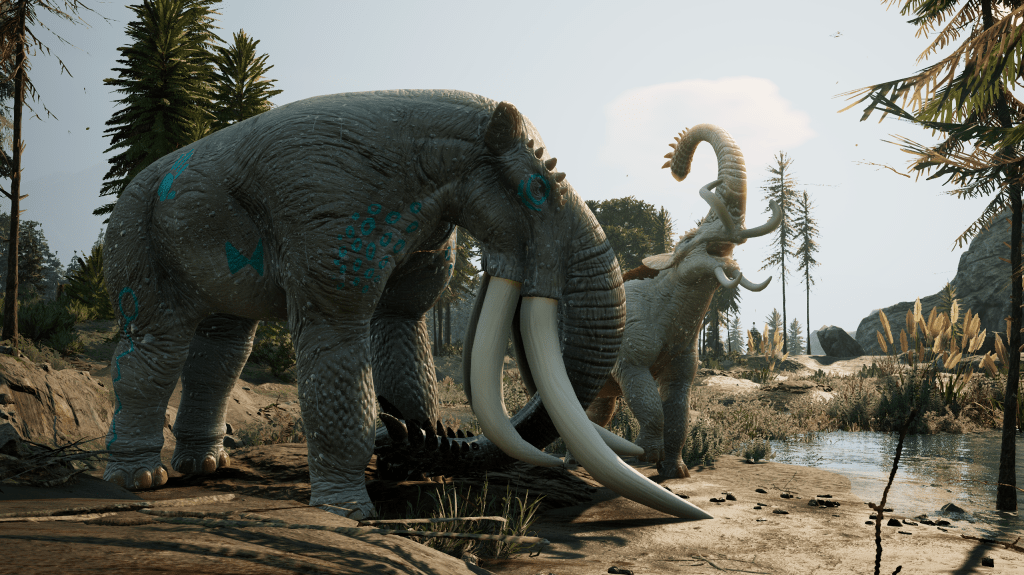
The Madrehorn is a massive, elephant-like creature known for its towering build, thick hide, and sweeping tusks. From a distance, it appears calm and steady, moving slowly across the landscape with quiet confidence. But that calm is deceptive when threatened, especially if a herd member or calf is in danger, the Madrehorn becomes fiercely aggressive. It will charge without hesitation, using its immense size and strength to crush anything that gets too close, making it both a symbol of power and a force to be feared.
Tier : 6
Dimorphism: Male Madrehorns are distinguished by their longer, more imposing tusks. (A male is also referred to as a bull, a female is called a cow, and the young is called a calf.)
Habitat: Wollemi Forest and East passage
Diet: Herbivore
Active Time : Madrehorn would be crepuscular meaning it was active during the early morning and late afternoon, avoiding the hottest parts of the day.
Defense: 2 adults/sub-adults
Nesting Season: Spring and Summer
Offspring: Up to 2
Adoption:✅
Behavior
The Madrehorn lives in tight-knit herds led by experienced adults, relying on cooperation and strong social bonds for survival. It communicates through deep, low-frequency rumbles and physical cues to stay coordinated over long distances. Highly protective and territorial, it reacts aggressively to threats especially when calves are in danger. Its movements and migration patterns reflect a balance of intelligence, strength, and instinct shaped by harsh, ever-changing environments.
Courting and Nesting
Male Maderhorn’s go through a period called musth, where rising hormones make them more aggressive and focused on mating; during this time they display their strength through sparring matches and posturing. Females tend to choose mates based on these displays, favoring the strongest and most dominant individuals. After mating, females often move to a safer, quieter area to give birth, though still close to the herd, and once a calf is born the group becomes extremely protective adults will form a defensive circle around the young and can respond with intense aggression toward any threat, charging or confronting predators to keep the calf safe. Madrehorn cows typically give birth to a single calf, though in very rare cases a female may have twins. ( 1-2 Mature males per herd – sons leave upon sub-adult )
Defensive Behavior
Bull Madrehorn’s can be highly aggressive, especially during musth, when hormone levels surge and they become more competitive, unpredictable, and focused on dominance and mating rights. In herd defense, typically two mature bulls will take the lead in confronting external threats, using displays, charges, and physical force to protect the group. If a young calf is attacked, the response becomes immediate and coordinated. Whichever cow is closest will step in to defend it, whether it is her own offspring or not, often joined quickly by other females forming a tight protective circle around the young. Aggression also escalates when rival bulls attempt to challenge or take over a herd, leading to intense confrontations as dominance and breeding rights are contested.
Mandatory Traits
Titan’s Lament
Madrehorns are bound by deep memory, and when one of their own falls, the herd gathers in solemn vigil. For several minutes, they remain close, gently tracing the fallen with their trunks as if committing every detail to memory, their usual strength subdued into quiet reverence. They remember, too, the shapes, scents, and faces of those who struck their herd mate down carving that knowledge deep into their minds. When they finally move, they do not stray far, lingering within sight of the body, watching in heavy silence. Even as they grieve, that memory endures, carried in slower steps and low, hollow calls, a quiet promise that such loss is never forgotten.
Lasting Ire
Madrehorns are quick to anger and slow to forgive, their emotions rising as swiftly as a storm yet lingering long after it has passed. Once wronged, they carry the memory with unyielding clarity, faces, scents, and the shape of the offense etched deep into their minds. Those who harm a Madrehorn or its herd are marked in this silent ledger, recognized even after long absence. A Madrehorn will strike without hesitation in the moment, but if the offender escapes, the grudge endures, and when paths cross again, its response is deliberate and relentless.
The Endless Passage
Madrehorns move with the turning of the world rather than the passing of days. As the leaves of the Redwoods begin to fall, they gather beneath the towering canopies to graze and rest, staying through the quiet descent of autumn. When winter begins, they drift toward the sheltered warmth of Wollemi Forest and East Passage, settling there until the soft spring sun grows warmer, following ancient routes carved by generations before them. With the arrival of summer, they often detour to the mudflats, coating themselves in thick layers of mud to shield their skin from the harsh sun during the final leg of their journey, before continuing onward to Cedars Forest, where the air is rich and cool beneath dense green shade. Their migration is steady and certain, a living rhythm tied to the seasons themselves, each forest holding a chapter of their endless journey.
Snowborn Calves
Due to their pale, delicate skin, Madrehorn calves are kept beneath dense trees and thick brush, where the canopy filters the harsh light of the sun. The herd remains close and protective, ensuring the young are shaded throughout the day to prevent burning. Only when the light softens or cover is available do the calves venture out, always staying close to the safety of the herd’s shadowed protection.
Optional TRaits
Wallowing Giants
Madrehorns often seek shallow waters and soft mud to cool and protect their bodies, much like modern elephants. The calves remain right along the shoreline in the safest, shallowest water, where they can rest and play without risk. The adults position themselves between the young and the deeper waters, forming a protective barrier that faces outward toward any potential threats from below or beyond. In this quiet arrangement, the herd settles into the river or mudflats together, half-submerged and still, using water and earth not only for comfort but as a layered defense while they rest between long migrations.
No-Go Zone
Madrehorns hold a strong, instinctive hostility toward crocodilians and ceratopsian-like creatures, recognizing both as serious threats rather than mere rivals. Crocodilians are feared for their ambush behavior in deep water, often striking from below where Madrehorns are most vulnerable, making river crossings tense and heavily guarded affairs. Ceratopsian-type herbivores are treated with equal caution on land massive, armored, and horned, they are seen as capable of violent clashes over territory, especially when herds overlap near feeding grounds. Encounters between them are rare but tense, with Madrehorns keeping their young close and their adults positioned defensively, ready to respond quickly if challenged or provoked.
No Fang Goes Unwatched
Madrehorns hold a deep, instinctive distrust of all carnivores, regardless of size. Whether small ambushers or massive apex predators, anything that hunts flesh is viewed as a threat to be avoided or driven off. In particular, they show no tolerance for smaller carnivores, as they are never seen as harmless only as potential scouts, distractions, or parts of a larger, more dangerous threat. This constant suspicion shapes their behavior in every environment they enter. The herd remains highly alert in the presence of such creatures, keeping their young close and their adults ready to defend, never allowing predators to linger near their paths or resting grounds.
Do Not Touch The Birds
Madrehorns show a gentle tolerance toward small herbivores, often allowing them to graze nearby without concern. Unlike larger creatures, these smaller beings are not seen as threats or rivals, and are sometimes permitted to move freely along the edges of the herd. They are especially fond of Citi’s and Struthis, whose small size and harmless nature place them firmly within the Madrehorns’ rare circle of acceptance. These small, bird-like dinosaurs are even regarded as “cute scouts,” often seen moving ahead of or alongside the herd without issue. However, this affection is fiercely protected any threat directed toward them is met with immediate and violent retaliation from the Madrehorns, who defend their small companions with surprising and uncompromising ferocity.
Credits : Littlered
Sources:
[https://en.wikipedia.org/wiki/African_elephant https://www.nationalgeographic.com/animals/mammals/facts/african-elephant https://www.ecowatch.com/elephant-kills-crocodile-2655335586.html https://www.nathab.com/blog/africa-story-video-elephants-and-lions-align-against-rhinos https://en.wikipedia.org/wiki/Palaeoloxodon_namadicus https://en.wikipedia.org/wiki/Gomphothere https://en.wikipedia.org/wiki/Oliphaunt ]
Last updated: 4/18/2026
 Ashes of Apex Fantasy Realism