Noviana
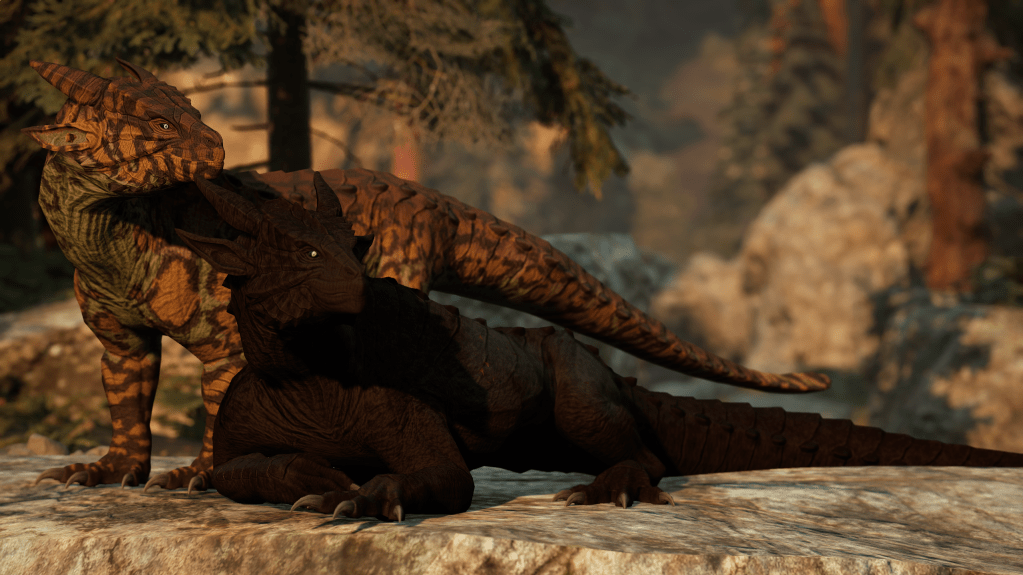
The Noviana is a rigid, low-slung, familial ambush predator of the swamps and river systems. Its anatomy is a convergence of feline grace and heavy, interlocking dermal plating reminiscent of ancient dragons, resulting in a body optimized for explosive straight-line acceleration and devastating, hemorrhagic attacks. The Noviana utilizes its powerful straight-line speed in small, coordinated hunting groups to execute a complex tag-team bleed strategy, compensating for its severe inability to maneuver in sustained, close-quarters combat.
Tier 4
Dimorphism:
- Male: Generally larger and more heavily built, with a broader skull. Males are often significantly lighter, with bright color markings for display.
- Female: Slightly smaller builds and noticeably darker, more mottled scale patterns for better camouflage in murky water.
Habitat: Riverine and Swamp Ecosystems. The Noviana is most often found in areas offering dense, concealing vegetation near or in water, as its ambush strategy requires heavy cover. It strictly avoids open beaches, barren coastline, and dry uplands. It uses the visual clutter of these areas for deep concealment.
Riparia: Cedrus Forest, Coastland Swamp, Cliff Edge Falls, Twisted Forest
Gondwa: Triad Falls, Birchwoods, Big Quill Lake
Diet: Fish and Meat. Prefers mid-to-large-sized prey that are slow to accelerate or are vulnerable near the water’s edge (daspletosaurus, albertaceratops). It will also actively hunt small aquatic prey (trout, turtles, arapima, crabs) within its territory.
Active Times: Crepuscular (Dawn and Dusk), with extended activity during the night. The low light offers optimal camouflage for its powerful ambush style. They become lethargic and seek deep cover during the hottest parts of the midday sun.
Group Composition: Groups consist of a mated pair and their offspring, a female and her grown offspring, or a pair of siblings. A mated pair has no more than five offspring at any given time, regardless of growth stage. When offspring have grown, no more than four Sub-Adults/Adults may occupy a family group at one time.
Attackers/Defenders: 3 individuals
Nesting Season: Spring
Offspring: up to 5
Adoption: ❌
Behavior
The Noviana’s existence is defined by familial cohesion and resource tracking. It is a Semi-Nomadic creature. While the family unit prefers to remain in resource-rich swamp and river zones, they must follow key prey species or move when local food sources become depleted.
Temperament (Social): Noviana maintain a familial social structure, forming small, cooperative hunting units typically composed of a breeding female and her offspring, with no more than four sub-adults or adults per group. During hunts or defensive actions, no more than two individuals will actively engage at a time. This group dynamic is essential for executing the “distract and attack” maneuvers required to take down larger prey. Highly territorial, they view their stretch of land as a sacred space for their family. They are unwavering protectors of their young, engaging in relentless combat to drive off any perceived threat to their nest or their wandering juveniles. Despite their aggression when provoked, Noviana will rarely engage without reason. They assess risk before striking, conserving energy unless territory, kin, or sustenance is directly threatened. Following a stressful encounter or failed hunt, Noviana will often retreat to deep, cool water to submerge and remain still, a habit believed to be both a stress response and a remnant of ancient cleansing behavior attributed to swamp drakes.
Movement: Semi-Nomadic. The family unit moves between known resource areas along major river systems and migration pathways. They tend to stick close to dense riverbank cover and will only relocate when forced by environmental change or lack of resources.
Courting
The courting process of the Noviana is highly selective. At common feeding sites, such as critter spawns or rich fishing locations, Noviana males tend to gather and compete in brutal competitions to earn mating rights. They battle until their rival either yields or dies, constituting their defeat. Although most males are large and powerful, slimmer individuals such as those of the aquatic species may outmaneuver and overpower the larger males. Females select only the winners of these battles, and will choose to produce offspring with a new victor should her chosen mate be defeated. When a male has no competition for a breeding female, their relationship may persist until another male enters the territory and fights the resident for dominance.
When a female enters her breeding cycle in the Spring, but there are no males in her territory, she may begin a process called parthenogenesis. This cycle allows her to asexually reproduce with no mate, resulting in the production of only one egg. The offspring is usually a healthy male, and the parental relationship is typical of the species. Females that experience parthenogenesis will alternate their breeding cycles, often leaving her territory the next season to reproduce normally and establish a bond with a dominant male.
Life Cycle and Parenting
- Parenting: Noviana are matriarchal. Typically, females establish nests near reliable water sources and raise no more than five offspring at a time. She remains highly protective until the offspring are strong enough to keep up with the family unit. The male’s role is strictly protection and defense. He utilizes his size and superior armor to patrol the area, acting as a visible deterrent to larger predators or rival Noviana.
- Hatchlings/Juveniles: At this stage, they are highly vulnerable and subsist mainly on small aquatic life. They are highly protected by the mother and stay within her core territory, using dense foliage to hide and avoid all other adult Noviana. They begin learning the scent and topography of the current hunting grounds.
- Adolescents: Serve as auxiliary hunters, actively participating in pack hunts to practice the core Coordinated Bleed Strategy. They learn the complex social cues and timing needed for tag-team attacks. They are only permanently dispersed by the mother when they reach Sub-Adult size, forcing them to find a new territory along the migration path.
Mandatory Traits
Shadowstalker
Must avoid vast, open places. Noviana prefers to move through cover, as well as to hunt from within it.
Water’s Embrace
Noviana are capable swimmers and ambush hunters. They often track prey from below the water’s surface, ambushing and attacking at the shoreline in a similar strategy to crocodiles such as Deinosuchus.
Blood and Benevolence
Noviana nurture and protect Tier 2 creatures and below, showing restraint toward smaller or weaker prey. When hunting, they focus on Tier 3 and above targets, choosing their hunts based on pack size and strength.
An Iron Bond
Solitary Noviana easily take to Flamekin bonds with smaller dinosaurs such as the Austroraptor or the Concavenator, and patrol their territory in defense of their companions. These bonds persist for many seasons, and in rare cases, Noviana have been observed nesting alongside their Flamekin partners.
The Lone Shadow
Noviana who have laid only one egg due to parthenogenesis tend to have more closely bonded relationships to their young than those with mates. This is due to the need for increased protection and safety of her sole offspring as the only provider. The mother Noviana remains in the shadows and actively avoids all other individuals. She will protect her offspring with her life, ensuring the continuation of her legacy no matter what.
Optional TRaits
Shoreplay
Noviana enjoys splashing in the shallow waters of riverbanks and lakeshores in the warmer months to cool down.
Retribution Instinct
After a failed hunt or territorial conflict, Noviana are known to hold grudges. Individuals may actively remember the scent or presence of an attacker and attempt to ambush them later, even days after the initial encounter.
- This trait does not bypass hunt timers, combat timers, or species cooldowns. Noviana must fully respect all standard server rules following a failed or successful hunt. They may not follow, stalk, track, camp, or otherwise remain in the area waiting for an opportunity to re-engage. Any future encounter must occur naturally after the applicable timers have expired.
Setting Sun, Resting Dragon
On rare occasions, Noviana exhibit a shift in their wary demeanor. They will laze in sun-soaked areas that still offer cover, such as bushy undergrowth or isolated cliff edges that provide both warmth and security, but they do not remain exposed for extended periods. During this time, they display a distinctly feline calm, quietly observing their surroundings. While at rest, they remain watchful over their young and Flamekin companions, maintaining quiet vigilance even in stillness.
Credit: Onlooker & MisslilBlue
This profile drew inspiration from the Thanator from Avatar, the drake, the jaguar, and the attack styles of both the Komodo dragon and the hippopotamus.
Last Updated: 6/27/26
 Ashes of Apex Fantasy Realism