Nyctatyrannus
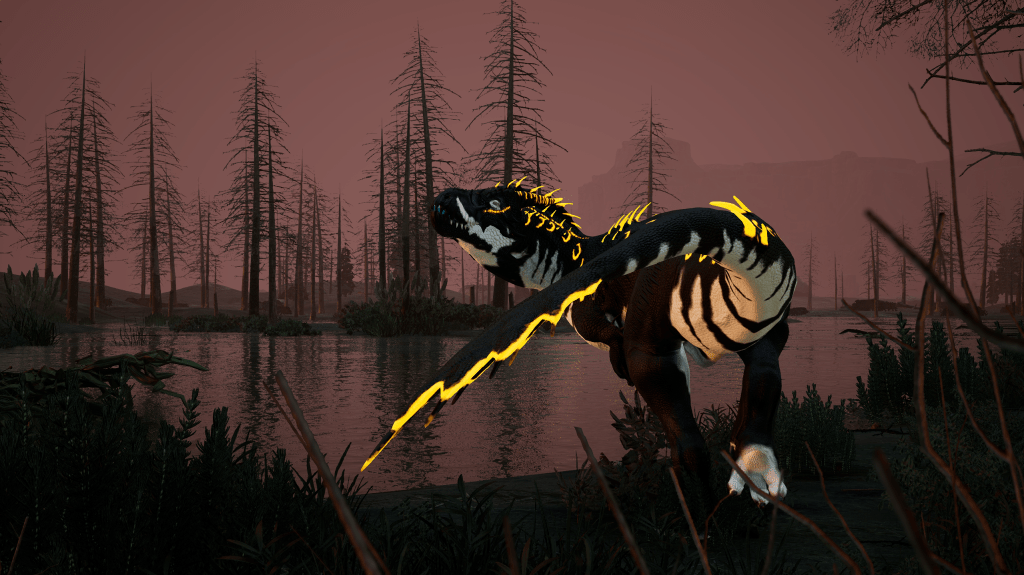
Nyctatyrannus, known as the “Night Tyrant,” roamed the Late Cretaceous period, around 70 to 65 million years ago, in areas rich with aquatic environments such as riverbanks, lakes, and swamps. It is believed to have evolved from water-adapted ancestors, a trait reflected in some of its physical features.
With a sleek, streamlined body, Nyctatyrannus was built for both swift land movement and occasional swimming, possessing long, muscular legs that could help it navigate through shallow waters. Its partially webbed feet (speculative, based on its aquatic ancestry) would have been perfect for paddling in water or maneuvering through wetlands. The creature’s large eyes, likely adapted for low light, hint at its nocturnal habits, allowing it to hunt effectively during the twilight hours when other predators were less active.
While primarily terrestrial, it would have been drawn to water sources, where it could hunt small prey or fish, using the reflection of the moonlight to aid in its stealthy approach.
Tier: 3
Dimorphism: Males will have brighter base colors, but both can have Bright bioluminescence.
Habitat:
- Riparia: Coastland Swamp, East Passage, Volcano Islands
- Gondwa: Mudflats, Rockfall Hill, Rainbow Hills
Diet: Carnivore
Active Times: Based on the etymology of its name, Nyctatyrannus has nocturnal or crepuscular habits. This means it would have been more active during the night or twilight hours, when other predators like larger theropods were less active, giving it an advantage in finding prey.
Group Size: 6 individuals
Attackers/Defenders: 3 individuals
Nesting Season: Spring and Summer
Offspring: Up to 5
Adoption: ✅
Behavior
Nyctatyrannus carries its water-touched heritage into its daily behavior, favoring the dim edges of wetlands where it nests, courts, and hunts under the veil of twilight. Courting involves low, resonant calls that roll across the water’s surface, paired with slow, sweeping displays of its tail and feathered frill, rituals performed in shallow pools where moonlight can catch its movement. When nesting, it chooses secluded spots near reeds or dense water plants, laying eggs in raised mounds of mud and vegetation that keep them safe from flooding and hidden from prying eyes. Despite its stealthy nature, Nyctatyrannus reacts swiftly when confronted by predators, standing tall and using deep, vibrating growls meant to intimidate, while relying on rapid bursts of speed and the cover of darkness to escape when needed. Its entire lifestyle revolves around shadow, water, and silence, an elusive hunter shaped by both night and wetland refuge.
Mandatory Traits
Crescent Watcher
During the quietest hours of the night, Nyctatyrannus often pauses its movements to stand silently beneath open sky, scanning the landscape under moonlight. These brief, still moments allow it to assess distant noises, shifting shadows, or the scent of unfamiliar animals without giving away its position.
Moonlite Lure
Nyctatyrannus can flash bioluminescent colors along its body to distract or mesmerize prey. While the target focuses on the shifting glow, another adult may sneak around the shadows to launch a coordinated attack. This rare, clever tactic combines stealth, social cooperation, and visual deception to give them a hunting edge in low-light conditions. (3 individuals is the engagement limit for hunting and combat)
Shadowless Song
When resting or relaxing in small family groups or mating pairs during the day, Nyctatyrannus can become surprisingly noisy, vocalizing softly or snapping foliage with playful nudges. These sounds are not meant to attract predators but serve as social bonding, allowing individuals to communicate moods, maintain hierarchy, or simply amuse juveniles. The daytime ruckus contrasts with their usual twilight stealth, showing a more relaxed, social side of the species.
Biolume Tactic
In confrontations with rivals, predators, or competitors, Nyctatyrannus employs a highly coordinated strategy. A single individual flashes bioluminescent patterns to serve as a focal point, while three others remain hidden in the shadows, silently circling and waiting for the perfect moment to strike. The flickering light makes it difficult for the opponent to gauge the group’s true numbers or anticipate attacks. This method allows the pack to control the fight with precision, relying on stealth, timing, and teamwork rather than prolonged brute force.
Optional Traits
Shadow Pupil
Juveniles develop their stealth instincts by practicing in dim conditions, weaving between underbrush, crouching behind fallen logs, or following the faint movements of their parents. These early games of mimicry teach them essential survival skills long before they hunt alone.
Silent Intercept
When guarding nests, mates, or juveniles, a hidden adult will remain perfectly still until a threat gets too close. Then, with almost no warning sound, it surges forward in a direct intercept line, aiming to break the attacker’s momentum rather than overwhelm it. This sudden, precise defense often buys enough time for the rest of the group to reposition or for the vulnerable to escape.
Credits: Littlered
Sources : Game play
Last updated: 11/24/2025
 Ashes of Apex Fantasy Realism