Peloroplites
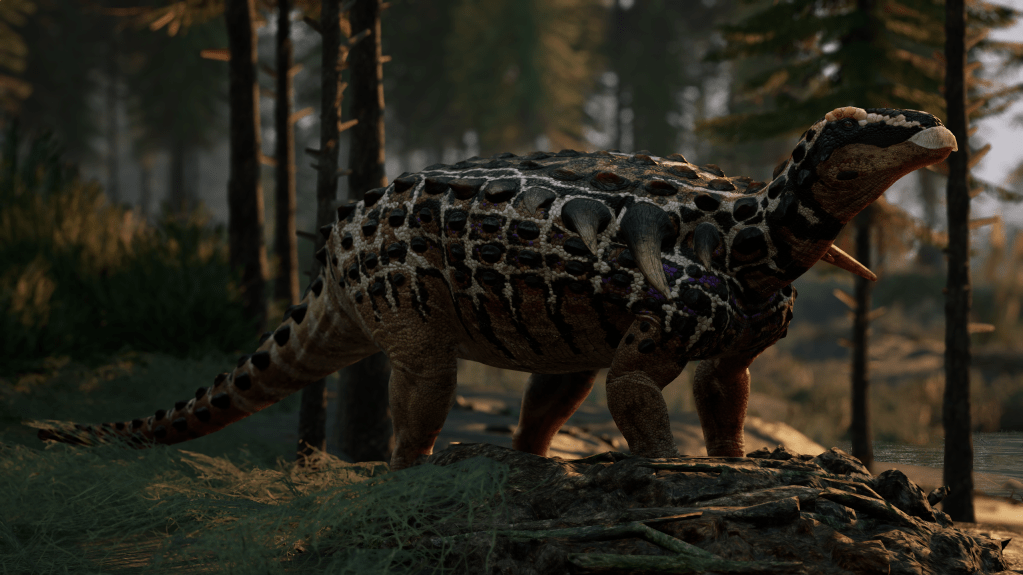
Peloroplites was a heavily built nodosaurid ankylosaur that lived during the Early Cretaceous period, approximately 112–100 million years ago. Fossils were discovered in the Cedar Mountain Formation of eastern Utah, placing it in what is now western North America. It is estimated to have reached lengths of around 5–6 meters (16–20 feet) and likely weighed between 2 and 3 metric tons, making it a substantial, low-slung herbivore. Like other nodosaurids, it possessed extensive body armor composed of osteoderms and spines, though it lacked the tail club seen in ankylosaurids. Its body plan suggests a broad, barrel-shaped torso, powerful limbs, and a narrow, beaked skull adapted for cropping vegetation.
As an obligate herbivore, Peloroplites likely fed on low-growing plants such as ferns, cycads, and early flowering vegetation, using its keratinous beak to shear plant matter before processing it in a complex gut. Its habitat would have consisted of semi-arid floodplains, river systems, and conifer-dominated woodlands characteristic of the Cedar Mountain ecosystem. The heavy dermal armor and lateral spines imply a defensive strategy centered on passive protection rather than speed or active counterattack. Phylogenetically, Peloroplites is considered one of the more derived nodosaurids in North America, contributing to our understanding of ankylosaur diversification during the Early Cretaceous. Overall, it represents a well-armored, ground-oriented browser adapted for resilience in predator-rich environments.
Tier: 4
Dimorphism: Males generally show darker coloring, while females appear brighter. However, different coloration could occur based on nutrition, habitat, and environment.
Habitat: Dry Fang Canyon, Cedrus Forest, Black Fern Hills, Crag Bluffs, Wollemi Forest, Cliff Edge Falls
Diet: Herbivore
Active Times: (Diurnal/Nocturnal) Sleeps during the night with a shift of Peloroplites keeping a watchful eye while the herd is sleeping and trading off to sleep during the day. During migrations, they will sleep at every other stop in shifts.
Group Limit: 10
Defense: 6 individuals
Nesting Season: Spring
Offspring: Up to 5
Adoption: ✅
Behavior
In daily life, Peloroplites functions as a heavily armored, herd-oriented browser structured around dominance hierarchies and seasonal competition. Much like extant large herbivores, leadership and breeding rights are established through ritualized sparring rather than indiscriminate violence, with combat serving as both a fitness test and a social sorting mechanism. During Spring, males and females separately compete until death scarring marks a clear victor, determining migration leadership and lifelong mating bonds; once paired, these bonds are permanent, and the loss of a mate results in social withdrawal and relinquishment of rank. Herd structure is governed by a strict pecking order in which established leaders control access to water, forage, and nesting grounds, and any challenger must defeat all present leaders to reorder the hierarchy. When encountering rival Anodontosaurus herds, interactions are tense and dominance-driven, with spike-versus-club spars deciding priority over territory and resources rather than outright species hostility.
Ecologically, Peloroplites spends much of its day low-browsing on ferns, cycads, and hardy vegetation across floodplains and woodland margins, relying on its osteoderms and lateral spines as passive deterrence against predators. When threatened, individuals close ranks into defensive box or X formations, positioning juveniles and lower-ranking members at the center while presenting a perimeter of shoulder spikes and muscular tails capable of sweeping deterrent blows. Nesting behavior reflects a defensive strategy as well, favoring caves, cliff edges, dense brush, or rocky terrain near water sources to maximize visibility and natural protection; temporary proximity to Anodontosaurus during nesting season reinforces collective security through numbers, though dominance is still contested. Seasonal migrations test endurance, after which individuals may recuperate in mineral-rich hot springs, reinforcing the image of a resilient, armor-conditioned herbivore. Overall, Peloroplites exists as a disciplined, dominance-driven defender that is slow to yield ground, socially structured, and evolutionarily built to endure both environmental pressure and predator-rich ecosystems.
Courting
Mating pairs are not chosen by preference but earned through strength, endurance, and visible proof of dominance. Males spar males and females spar females in structured brackets to determine seasonal ranking. A spar is only considered decided once death scars appear on the losing opponent, marking a clear physical and social defeat. In a four-member bracket, two initial spars determine finalists, and the winners then face each other to establish the top-ranked pair, while each loss records placement in the seasonal mating order. Once bonded, a pair is mated for life. Should a Peloroplites lose its mate, it will relinquish leadership, sever herd ties, and withdraw into permanent solitude, carrying its grief in exile.
Nesting
Peloroplites favor nesting at Cliff Edge Falls, prioritizing caves, deep brush, or naturally defensible terrain. If caves are unavailable, they select sites near water with dense vegetation or elevated vantage points that allow clear sightlines against approaching threats. Though not true allies of Anodontosaurus, they will nest in proximity during breeding season to strengthen defensive security through numbers, forming a temporary but tense coexistence. Peloroplites often incorporate stones into their nests or choose rocky terrain to harden and condition their vulnerable young, symbolically and physically preparing them for a life of armor and conflict. When sharing territory with Anodontosaurus, herd leaders spar to determine priority over nesting grounds, food, and water. If multiple herds are present, each leader must be challenged in turn (after returning to full health) to formally establish the seasonal pecking order.
Mandatory Traits
Pecking Order
Any Peloroplites or Anodontosaurus entering territory with an established hierarchy must respect the current structure and integrate accordingly. A herd may challenge for dominance, but doing so requires the challenging leader to defeat every acting herd leader present to reset the hierarchy. These encounters are not ritual spars; they are true dominance battles and may result in death, as herd survival and access to resources are at stake. Submission may end a fight before death, whether declared beforehand or during combat; however, only a leader who has fought with full resolve earns respect in submission. Early surrender without proving effort undermines authority and weakens herd confidence.
Sparring
During Spring, and only when properly equipped, Peloroplites may spar within their herd to determine migration leadership. These ritualized contests conclude when visible death scarring appears, marking the first to falter. The scarred individual forfeits leadership rights, and challengers continue until a clear dominant leader remains. Leadership stands uncontested only when no other Peloroplites are willing to risk the scars required to claim it.
Spikes Vs. Clubs
Peloroplites and Anodontosaurus exist in a state of competitive rivalry, neither allies nor outright enemies. Upon encounter, ritual sparring may occur to assert dominance, ending once death scars are shown. When such encounters take place during migration or nesting season, the outcome determines which species herd receives priority access to territory and resources. These contests reinforce strength, hierarchy, and territorial legitimacy without devolving into unnecessary slaughter.
Formation X
When faced with external threats, Peloroplites immediately consolidate into a defensive box or X formation. Juveniles and lower-ranking members are placed at the center while dominant adults form a perimeter of spikes and armored mass. This structure maximizes their lateral shoulder spikes for deterrence and allows rapid rotational defense using their tails against flanking predators. The formation reflects their evolutionary strategy: endure, absorb, and repel.
Optional Traits
Hot Potato
If set ablaze or exposed to fire-based attacks, Peloroplites may panic and charge blindly, colliding with creatures or terrain and potentially spreading flames in the chaos.
Mashed Potato
After enduring migration season, Peloroplites may spend Spring near geothermal hot springs, soaking their armored bodies in mineral-rich waters to restore stamina and condition their hide.
Spoiled Potato
A Peloroplites that loses its lifelong mate abandons herd life entirely, embracing solitary exile. These individuals no longer seek companionship and often display heightened aggression, particularly toward apex predators. In battle, they pursue either vengeance or release, believing that only through struggle can they reunite with their fallen mate.
Credits: D4VYJ0N3S
Sources: https://www.smithsonianmag.com/science-nature/peloroplites-thats-one-big-ankylosaur-16565527/
https://en.wikipedia.org/wiki/Peloroplites
Last Updated: 02/11/2026
 Ashes of Apex Fantasy Realism