Popsaurus
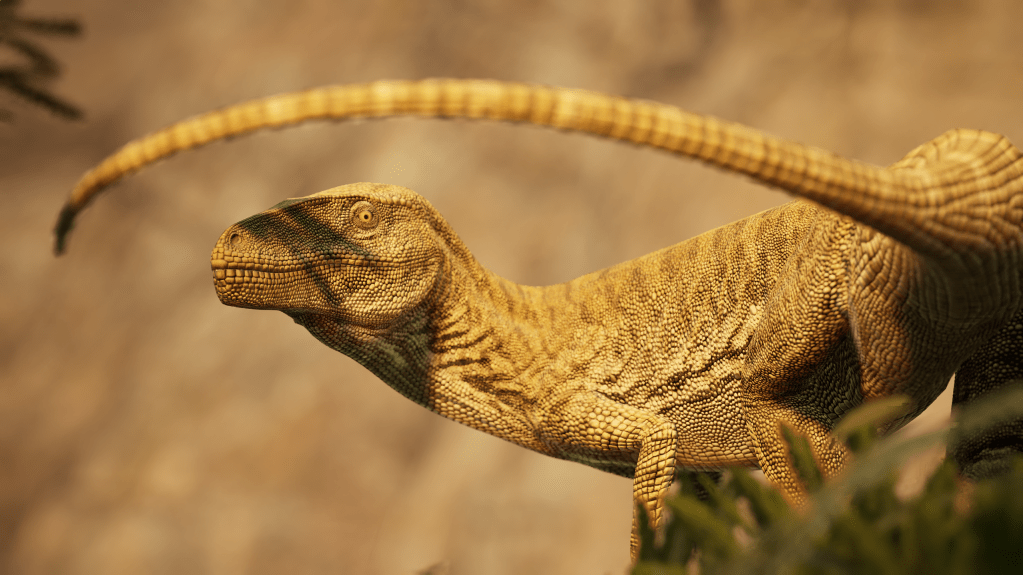
Poposaurus gracilis was a pseudosuchian archosaur from the late Triassic period, living over 200 million years ago. Despite being an obligate biped, walking on two legs, Poposaurus was not a true dinosaur. It was instead more closely related to modern crocodilians. These pseudosuchians have been found in both the southwestern and eastern U.S., in what would have been vast floodplains and river deltas during the time of the late Triassic.
Tier: 2
Dimorphism: None
Habitat: Poposaurus prefer to live in forested river biomes, archipelagoes, and lush coastal estuaries.
Poposaurus can nest anywhere in Riparia or Gondwa or Riparia, recommended areas include:
Riparia: Volcano Islands, Cedrus Forest, Cliff Edge Falls, Wollemi Forest, East Passage
Gondwa: Green Valley, Lower Triad Falls, Young Grove, Darkwoods, Hunters Thicket, Rockfall Hill
Diet: Carnivore
- Poposaurus prefer small prey whose quick movements are easy for them to spot and keep up with. Poposaurus are opportunistic feeders and will often eat carrion and bones, especially when critters are scarce.
Active Times: Poposaurus are crepuscular – active at dawn and dusk- and prefer to shelter in caves or under cliff ledges during the hottest time of the day, and coldest time of night.
Group Size: 8 individuals
Attackers/Defenders: 6 individuals
Nesting Season: Spring and Summer
Offspring: Up to 5
Adoption: ✅
Behavior
Poposaurus are highly social and intelligent creatures that inhabit floodplains and heavily forested river shorelines. Poposaurus are noisy communicators that rely on constant vocalizations, body language, and movement to communicate with one another and their companions. They have a high prey drive and a keen eye for small, fast critters in the undergrowth, and will often investigate anything that catches their interest.
Though they are capable of surviving alone, most Poposaurus become restless and uneasy without companionship. Lone individuals will actively seek out others, whether their own kind or larger carnivores, to travel with. They are particularly drawn to powerful predators such as Tyrannosaurus, Gigantosaurus, and Acrocanthosaurus, and sometimes even large crocodilians, trailing them for protection, scavenging opportunities, and social interaction. Over time, Poposaurus adapts its movements, resting patterns, and migration routes to mirror those of its chosen companion.
Poposaurus are problem-solvers, using their intelligence to navigate complex environments and social situations. They quickly learn the habits and tolerance threshold of the creatures around them, allowing them to linger safely where others would be driven off. This awareness makes them unusually adept at forming and maintaining Flamekin bonds, even with semi-aquatic carnivores, for whom they may scout and assist in hunts.
In groups, Poposaurus are lively and chaotic, engaging in playtime and sharing meals, along with splashing around in sheltered, shallow waters. They frequently check on their companions using low calls, and often bring meat chunks as a way to ensure their groupmates stay fed. While typically not aggressive, their demeanor shifts dramatically during nesting season, where their otherwise bright curiosity gives way to fierce and unwavering defense of their young.
Courting and Nesting
Poposaurus form seasonal pair bonds centered around displays of intelligence and attentiveness. Individuals decorate their nests with valuable trophies and colorful objects like red ginger plants to attract a potential mate, often moving playfully and vocalizing to initiate the bonding process.
Once bonded, pairs work together to maintain and defend the nesting site, reinforcing their connection through constant interaction and cooperation. These bonds persist through the nesting season, with both partners taking an active role in defending the nest and caring for hatchlings.
Poposaurus parenting is highly attentive. Mated pairs raise their young together within sheltered nesting grounds, often alongside extended family groups. Older siblings and nearby Poposaurus may assist in guarding and tending to hatchlings and juveniles, forming creches and strengthening group cohesion. As the season ends, pair bonds may gradually dissolve, and individuals may return to their broader social structures or seek new companionship.
Mandatory Traits
Hearts Too Bright
Poposaurus possess an almost reckless friendliness, approaching even apex predators with persistent curiosity. They may linger too long, pestering for attention until they are snapped at and chased away. Yet beneath this behavior lies a sharp mind. Popo are quick to read patterns and temperaments, and in some cases, may form bonded companionships with larger predators, including massive aquatic hunters such as Sarcosuchus and Deinosuchus. Through awareness and timing, they navigate danger not alone, but alongside creatures that might otherwise pose a threat.
- Poposaurus may form Flamekin bonds with T3 and higher semi-aquatic carnivores.
- Popo may scout and initiate hunts for their Flamekin partners.
Collector’s Eye
Poposaurus build nests in lowland river environments and densely shrubby shorelines for easy access to fresh water and preferred critters. They decorate their nests with colorful and eye-catching natural materials, such as flowers, red ginger, and seashells, to attract mates and communicate their status to other Poposaurus. Nests are often carefully arranged, with particular attention given to placement and presentation, reflecting their keen eye and intelligence.
Don’t Mess with the Creche
Poposaurus males and females take equal care of their young and raise them until adulthood. Popo young will remain with their family for many seasons after reaching adulthood. They may form “creches” or groups that fiercely protect their younger siblings. Nesting is the only time Poposaurus are known to become aggressive. Poposaurus mothers will defend any and all young in their chosen nesting grounds from any creature that could prey upon them. They do this with 1 threatening call to any dinosaurs within 2 body lengths of her nest/hatchlings before attacking, if the intruder does not back away.
Optional Traits
Chow Time!
These social dinosaurs have nurturing tendencies that go beyond family. They may find and bring chunks of its favorite foods to its companion or others within the group as a way of social bonding. It will watch attentively as their friends eat, making sure every group member is fed. It may perform this behavior with noxious meat or carrion, and become frustrated if/when their group members cannot or will not eat it.
Sublime Swimmer
Poposaurus have an innate love for water, and are known to build their nests near freshwater ponds or streams deep enough for them to swim in. They teach their young to swim, and can often be found splashing, bathing, or soaking in these water sources.
Snack Bandit
Poposaurus are opportunistic scavengers, using their intelligence to locate and acquire food. They often position themselves in vantage points near fresh carcasses, waiting for the right moment to snatch chunks of meat while avoiding direct confrontation. This behavior demonstrates both cunning and patience, and may occasionally result in unexpected interactions with other carnivores as Poposaurus test their timing and speed.
Credits: Onlooker
Sources:
https://en.wikipedia.org/wiki/Poposaurus
https://en.wikipedia.org/wiki/Caiman
https://en.wikipedia.org/wiki/Common_raven
Last Updated: 4/1/25
 Ashes of Apex Fantasy Realism