REalism Rules
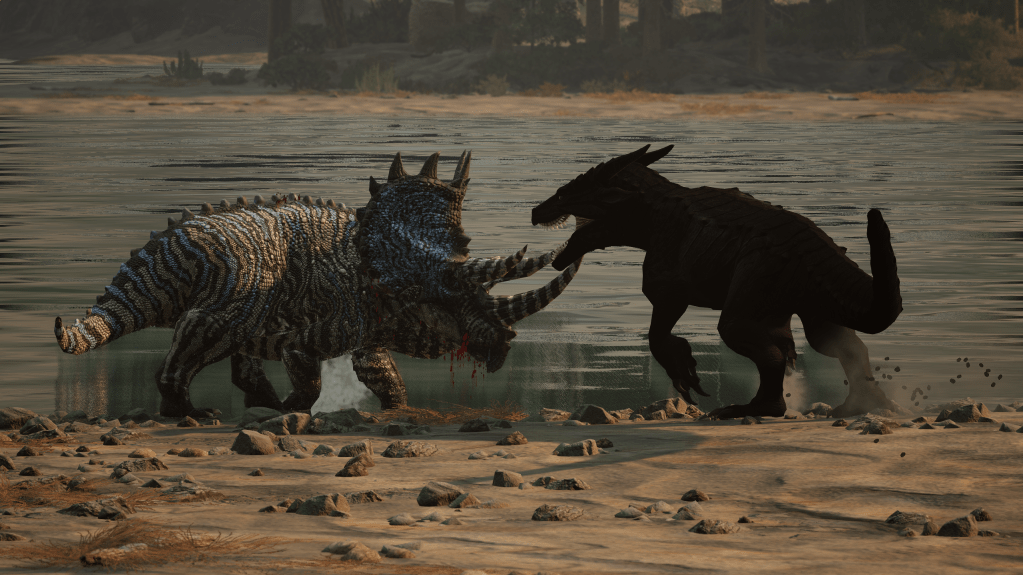
RP & In-Game Behavior
Rule Hierarchy
- Species profiles override the general rules below when a conflict exists.
- Always check your creature’s profile for specific behaviors, abilities, or limitations.
Roleplay with Purpose
- Do not send random group invites to other players
- Follow realism appropriate to your species.
- Keep interactions immersive and consistent with the world of Ashes of Apex.
- Exploiting mechanics to gain an advantage is forbidden.
Fair Play
- No griefing, camping, spawn-blocking/killing, or repeated harassment in-game.
- Respect other players’ RP experiences.
- Logging out or teleporting mid-fight or while being pursued will result in disciplinary action.
- Switching characters or servers to rejoin the same encounter is prohibited.
- Staff may review repeated or suspicious incidents of reported retaliation to ensure compliance and fairness.
Teleporting & Consent
- Teleporting to another player requires their permission.
- Teleporting to another player without consent is not allowed.
Spawn-camping is FORBIDDEN
- This action will be met with the full force of the staff.
No Mix-Packing
To maintain realism, carnivore species cannot form mixed hunting, combat, or survival groups (see exceptions below).
Herbivores may group together, as mixed-species herds are common and realistic. However, individual species profiles may place limits on grouping behavior, including:
- Which species they tolerate
- Herd size or structure
- Defense limitations
- Seasonal, territorial, or behavioral restrictions
Always defer to the species profile if one exists.
Exceptions apply only when:
- The species profile directly states that specific cross-species cooperation is or is not allowed.
- A Flamekin Bond is established between the characters. Flamekin Bonds grant exceptions to mix-packing rules. See the full Flamekin Bond Clarification for details.
Personal Space & Social Awareness
Species profiles define social tolerance, territorial behavior, warning displays, herd dynamics, or aggression levels. Certain creatures may naturally tolerate close proximity or social interaction more than others, while some may be territorial, defensive, or intolerant of unfamiliar creatures in their space. Pay attention to obvious social cues, body language, warning behaviors, and the expectations outlined in their species profile during interactions.
Personal Space
- Personal space is considered a one-body-length radius around your creature. A body length is based on the size of your creature (for example, a Spinosaurus would use one Spinosaurus body length in all directions around itself).
- If another creature enters that space unreasonably or ignores obvious warnings, creatures may react defensively.
- You must use warning behaviors such as threat displays, snapping, nipping, charging, swatting, or aggressive vocalizations before fully enforcing their personal space.
- Do not deliberately invade another creature’s personal space in order to provoke reactions, force defensive behavior, bait aggression, or exploit profile-driven territorial or social responses.
Spatial Awareness & Disruptive Behavior
- Persistently crowding, hovering around, following too closely, or ignoring repeated warning behaviors may be treated as disruptive conduct depending on the species profile.
- You are expected to maintain reasonable spatial awareness and consideration during interactions.
- Do not casually linger close to potential prey, rivals, or territorial creatures without meaningful interaction or intent.
- Remaining within another creature’s space while “just hanging around” with friends may still be viewed as unrealistic or disruptive behavior depending on the situation and species involved.
Species Behavior Expectations
- If your creature would realistically hunt, challenge, avoid, stalk, warn, become defensive, or leave an area in any given scenario, your behavior should reflect that.
- Some species profiles may define creatures that are more indifferent, tolerant, social, or unconcerned with nearby creatures. In those cases, nearby creatures may be treated with less attention or concern, but behavior should still remain believable for the species and situation.
Eating & Drinking
- Creatures must touch food and water with their mouths.
Social RP
- Alliances, packs, herds, or social groups should follow species profile behavior.
- Do not send random group or baby invites. Invitations should be part of roleplay or agreed interaction.
Species Behavior & Survival
- Play your species realistically. Read the profiles. Predators hunt prey, herbivores graze, and social structures (packs/herds) are respected.
- KOS (kill-on-sight) is not allowed unless specifically justified by a species’ profile or lore.
Dimorphism
Some species profiles may include visual dimorphism between males and females. Not following dimorphism is not a rule break on this server. However, doing so may make it harder for other players to identify your creature’s sex, which may affect social interactions such as finding a mate, and may lead to more conflicts depending on the species.
Nesting Requirements
- A proper nest requires one male and one female of the same species in the group, unless a profile specifically says otherwise.
- If there are two males, a female of that species must also be in the group.
- If there are two females, a male of that species must also be in the group.
Single-parent nesting is only allowed during staff-approved “Life Finds a Way” Events, unless otherwise specified in a profile. These events may occur multiple times per day. While the bot is not active to announce this yet, they will be announced manually by staff in Discord and in-game.
Nests should not be destroyed or raided by other players unless specifically written into a species profile.
Combat & Hunting Etiquette
Respect fair play and in-game mechanics at all times.,
All hunting and combat must end at the 2-minute server restart reminder.,
Third-partying is not allowed unless supported by your species profile. Always check your profile before engaging.,
Carnivores may not initiate a hunt when hunger is above 60%. Carnivores are expected to hunt with purpose, not excess.,
After a successful hunt, predators may not target the same creature, species, or herd again for 30 minutes.,
After a failed hunt, predators may not target the same creature or herd again for 15 minutes.,
Creatures may engage prey they can reasonably bring down in a natural encounter. Do not engage in fights that require excessive time, rely on unrealistic risk, or place you at a clear disadvantage without group or profile support. Encounters may not rely on prolonged chasing, repeated disengagement, or unrealistic persistence to secure a kill.,
Pick your fights wisely. If you take on something beyond your capability, don’t expect it to end well.,
Tier 5–6 creatures may not initiate hunts on Tier 1–2 creatures unless their species profile allows it. Defensive kills are allowed when protecting yourself, your group, or your offspring.,
Keep engagements believable for your creature. Do not target prey that does not make sense for your size or role, whether solo or in a group.,
Group hunting must reflect natural coordination. Large groups may not overwhelm significantly smaller or weaker targets, and small creatures may not mass-attack significantly larger creatures unless their profile allows it.,
Do not intentionally die in water or in hard-to-reach areas to make your body inaccessible to your attacker.,
Species profiles may define additional limits, behaviors, or exceptions. Always check your creature’s profile before engaging in combat.,
Situations not explicitly covered by these rules will be judged based on realism, fairness, and common sense. Staff decisions in these cases are final. Ignoring the spirit of these rules or attempting to exploit loopholes may result in enforcement, even if a specific rule is not directly violated.
Third-Partying & Opportunistic Behavior
Third-partying is not allowed unless specifically supported by your species profile.
Third-Partying
- Creatures may not directly interfere in ongoing combat encounters they are not involved in unless their profile specifically allows it.
Opportunistic Behavior
- Injured or vulnerable creatures may still attract opportunistic predators, scavengers, rivals, or territorial aggression after an encounter.
- Opportunistic behavior should occur naturally and realistically, not through intentionally waiting around active fights solely to target weakened survivors immediately afterward.
- Realistic opportunistic behavior is allowed so long as it remains believable, fair, and compliant with all combat and profile rules.
- Know your creature’s profile before engaging.
Adult Group Size & Combat Participation Limits for carnivores and herbivores
Herbivores have no defined group-size limit when herding with members of their own species unless one is established in their profile. They must still follow the defender limits for their tier. They can also form mixed-species herds with no overall group-size limit unless a participating species’ profile limits how many members of that species can be included in the herd or whether they are permitted to defend other species.
Herbivores and carnivores cannot join an encounter to defend a creature of another species unless their profile specifically allows it.
- Tier 1 = 10 total group members (maximum 8 attackers or defenders)
- Tier 2 = 8 total group members (maximum 6 attackers or defenders)
- Tier 3 = 6 total group members (maximum 4 attackers or defenders)
- Tier 4 = 4 total group members (maximum 3 attackers or defenders)
- Tier 5 = 3 total group members (maximum 2 attackers or defenders)
- Tier 6 = 2 total group members (maximum 1 attacker or defender)
Any creature directly attacked in an encounter may defend itself regardless of age or combat participation limits. Combat participation limits apply to coordinated attackers and defenders entering the encounter beyond immediate self-defense.
▸ These group limits are to be adhered to as a baseline requirement.
▸ A creature’s profile can supersede these group limits, and either take away or add to baseline limits.
▸ Always check your creature’s profile to confirm your true group limits.
▸ Group limits may include your Flamekin bond(s) as well. Be sure to check profiles! If no profile currently exists for your creature, ensure these baseline rules are adhered to in order to avoid committing a rule break.
Self-Defense
- Any creature directly attacked may defend itself regardless of age or combat participation limits. The attacked creature does not count toward defender limits.
- Combat participation limits still apply to any additional creatures joining the encounter as defenders.
- Once the attacker disengages, the defending creature must also disengage from the encounter.
Kill Claim and Body Down
- Tier 1 bodies do not count as a body down due to their low feed values.
- Tier 2 and above bodies do count as a body down, but depending on the size of the pack and the tiers initiating the attack, hunts may continue based on tier:
▸ Tier 2: Up to 3 bodies can fall before combat must end.
▸ Tier 3: Up to 2 bodies can fall before combat must end.
▸ Tier 4: Only one body can fall before combat must end, unless a group of T5/T6 creatures has initiated the hunt, then the limit becomes 2.
▸ Tier 5: Only one body can fall before combat must end. - The player(s) who delivered the killing blow own the carcass.
- Players may eat a body until full, and may leave the body to be claimed by other players.
- After 30 seconds, the body may be contested. A contest is initiated by 3 Aggressive calls from the initiating creature; the creature being contested can choose to leave the body or fight to keep its claim. (Contest fights will likely end in death; retreat is possible upon death scars.)
- If a herbivore, in defense of itself or through actions dictated by its profile, causes a body down, the herbivore must depart the area; if it chooses to remain, it might become part of the menu.
Location Dropping
To protect everyone’s gameplay:
- Players may share their own location in chat if they choose.
- Players may not reveal another player’s location under any circumstances.
This includes mates, rivals, random passerby creatures, and that one stealthy Utah you swear you saw earlier.
Indirect hints count as location dropping.
Examples of what not to say in global or local chat:
“Some big Apex is definitely at Redwoods right now.”
“I heard a roar near Big Tree Lake.”
“They died, so they’re probably back at Palm Islands” = still location dropping.
Violation = warning, then penalties if it continues to happen.
We protect fair play and immersion here, not free tracking services.
Creatures Without a Completed Species Profile
- Any creature that does not yet have a species profile must follow baseline realism and general behavior expectations, the standard Combat & Hunting Etiquette, as well as Group Size & Combat Participation Limits listed above.
- These creatures cannot claim special abilities, unique behaviors, or exceptions normally granted by profiles with established lore.
- They may not participate in blood feuds, clan wars, or grudge-based retaliation unless their profile is officially released.
- Hunting, combat, and social behavior must remain neutral and grounded in standard predator-prey dynamics.
- These creatures may not justify KOS behavior or lore-based aggression until a profile defines their species traits.
- When their official profile is released, players must adjust their behavior to match it going forward.
Revenge & Grudges
- Revenge hunting is not allowed. You cannot track down or attack the player or group that killed you after respawning.
- The only exception applies to creatures whose species profiles specifically state that they hold grudges or remember aggressors after a FAILED hunt. These species may retaliate per their profile if the encounter happens naturally, not through stalking or planned revenge.
- If your species does not have this trait, the conflict ends permanently for you once your character dies.
Engaging in a Blood Feud or Clan War
Certain species in Ashes of Apex have natural enemies or ancient rivalries written into their lore. These “blood feud” relationships are unique to those species and allow exceptions to normal combat and kill-claim rules.
These exceptions only apply if the species profile specifically states that the creature participates in a blood feud or holds long-standing grudges.
- Species with a blood feud war may engage their rival species on sight, even without hunger or territory motive.
- Feud-based fights must still follow fairness and realism: no spawn camping, harassment, or exploit use.
- All behavior during feud encounters must align with what is written in the species profile. If the profile limits aggression or defines how the feud plays out, those limits override general combat rules.
- A blood feud does not mean unlimited revenge.
- Players may not target individuals repeatedly or follow them across the map.
- Staff will monitor feud-based fights closely. Abuse of feud fights or clan wars may result in restrictions or removal of feud privileges for that species.
Events & Special Scenarios
- Staff-run events may temporarily override standard RP rules (lore-driven scenarios).
Enforcement & Consequences
- Public callouts by players are prohibited. All infractions should be reported through tickets. Staff may address issues publicly when necessary.
- Consequences depend on severity: warning → mute → kick → temporary/permanent ban.
- Repeat or severe violations may escalate to the review of Sovereigns of the Flame.
Ashes of Apex is built around fantasy realism, fairness, immersion, and good-faith roleplay. These guidelines are intended to support immersive gameplay, meaningful interactions, and a healthy community experience while establishing consistent standards for gameplay, player conduct, and server integrity. Not every possible situation, exploit, or scenario can be covered in writing. Players are expected to engage in good faith and support fair gameplay at all times. Situations not explicitly covered by these rules will be judged based on fantasy realism, fairness, common sense, and the overall intent of the server. Ignoring the spirit of these rules, attempting to exploit loopholes, or circumventing intended limitations may still result in enforcement action, even if no specific rule explicitly prohibits the behavior. Staff decisions in these cases are final.
FLAMEKIN BOND CLARIFICATION
The Flamekin Bond is a lore-driven symbiotic pairing between dinosaurs.
- Solitary species may only have a Flamekin if their profile allows it.
- A Flamekin never replaces a mate.
- The Flamekin’s role (caretaker, scout, support, or fighter) must follow the profiles involved.
ALLOWED
- Traveling together
- if permitted by the flamekin’s profile, defending and hunting together
NOT ALLOWED
- Mix-packing with any species outside your Flamekin partner
- Chain-linking (A bonds B, B bonds C…)
- Declaring a Flamekin bond during or right before combat
SPECIES & TIER RULES
- Tier 1 and Tier 2 dinosaurs cannot have Flamekins of their own
- Tier 3 and above may have Flamekins only if their profile allows it
GROUP FLAMEKIN LIMITS (Important)
These limits apply to the entire group, not individual players:
- Up to three Tier 1 Flamekins total
- Up to two Tier 2 Flamekins total
- Up to one Tier 3 Flamekin total (only if profiles directly allow it)
A group cannot multiply Flamekins by player count
Example: A 3-player carnivore pack still only gets three T1, two T2, or one T3 total, not per player.
ADDITIONAL SPECIES RESTRICTIONS
- Flamekins are limited to Tier 1 or Tier 2 unless a profile explicitly allows higher
- Carnivores bond only with carnivores
- Herbivores bond only with herbivores
- Omnivores may bond either way (profile specific)
- Aquatics may bond with aquatics
- Semi-aquatics may bond with semi-aquatics
- Semi-aquatic fliers may bond with semi-aquatics
- Aquatics and semi-aquatics may bond with each other (does not include flyers)
- Flyers may bond only with other flyers
- Land species bond only with land species
As always, profiles may override these limits.
Species Consistency Requirement for Carnivores
- Carnivores with more than one Flamekin must keep all Flamekins the same species.
This prevents disputes, rival instincts, and in-character conflicts between incompatible carnivore species. - Herbivores may have Flamekins of different species as long as their profiles allow it.
FLAMEKIN COMBAT & DEFENSE
Flamekin interactions are governed independently by each involved species profile.
A Flamekin species may have profile permissions allowing it to:
- Assist in hunts
- Aid in defense
- Intervene during certain encounters
- Heal during or after combat
If a Flamekin species profile does not specifically allow combat assistance, hunting assistance, defensive intervention, or similar cooperative behavior, then those actions are not permitted.
In those cases, the Flamekin is limited to non-combat interaction and passive support behavior such as scouting, alerting, observing, traveling alongside its bonded partner, or acting as an extra set of eyes outside of combat situations.
Passive support behavior does not permit the Flamekin to directly participate in combat, harass another creature, bait targets, coordinate hunts, track targets during combat, interfere in another creature’s encounter, or otherwise influence the outcome of a combat situation unless explicitly permitted by the profile.
Baiting includes attempting to lure, pressure, provoke, guide, or pull another creature into an active combat situation or toward allied creatures through movement, harassment, threatening behavior, aggressive vocalizations such as 3-calls, or initiating combat interactions.
Each involved species must independently possess profile permission for any combat-related cooperation it participates in.
This also applies to healing abilities for both Flamekins and their bonded creatures. If a creature’s profile does not specifically state that healing may be performed during combat, then healing may only be performed outside of combat situations after combat has ended.
A higher-tier/larger creature is not automatically permitted to defend, protect, or assist its Flamekin simply because the Flamekin’s profile allows cooperative behavior.
If the higher-tier/larger creature’s profile does not specifically state that it protects, defends, or otherwise cooperates in combat with Flamekins, then those behaviors are not permitted.
CARNIVORE SPECIES CONSISTENCY
Carnivores with multiple Flamekins must keep all Flamekins the same species unless a profile explicitly states otherwise.
This prevents rivalry behavior, incompatible predatory dynamics, and disputes between unrelated carnivore species.
ADDITIONAL CLARIFICATIONS
- Solitary species may have a Flamekin only if their profile allows it
- A Flamekin never replaces a mate
- Flamekin behavior must remain consistent with all involved profiles
- Staff may restrict or deny Flamekin pairings that conflict with fantasy realism, lore consistency, balance, or intended gameplay design
The intent of a Flamekin is to support immersive symbiotic relationships and roleplay flavor, not to create unrestricted combat alliances or loopholes around species limitations.
IF YOU’RE UNSURE, ASK STAFF BEFORE DECLARING A FLAMEKIN BOND.

