Skyshroud Drakara
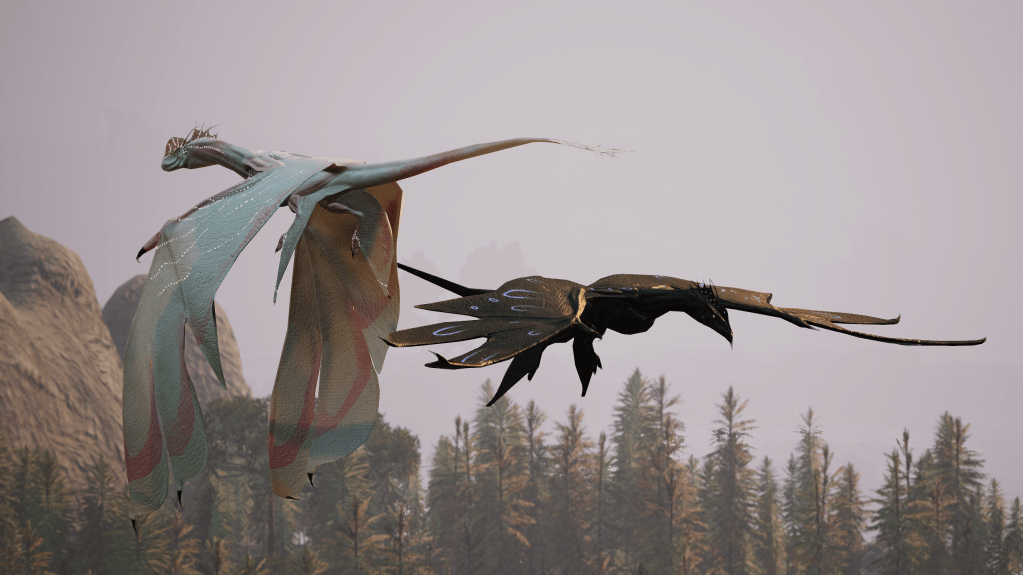
The Skyshroud Drakara is a swift, highly specialized flyer adapted for life along sheer cliffs and high mountain roosts. Measuring roughly 20 to 23 feet in body length with a 39 to 46-foot wingspan, this medium-sized predator weighs around 1.5 tons. Sleek and agile, the Drakara’s bioluminescent wings are designed for effortless maneuvering through high-altitude wind currents. Built for speed over brute strength, it uses rapid dive-bombs to kill prey before quickly retreating to the safety of the sky.
Tier: 3
ᴅɪᴍᴏʀᴘʜɪꜱᴍ: Nᴏɴᴇ
ʜᴀʙɪᴛᴀᴛ: Exᴄʟᴜꜱɪᴠᴇʟʏ ʟᴇᴅɢᴇꜱ, ᴄʟɪꜰꜰꜱ, ᴀɴᴅ ʜɪɢʜ ᴛʀᴇᴇᴛᴏᴘꜱ ᴏɴʟʏ ᴀᴄᴄᴇꜱꜱɪʙʟᴇ ʙʏ ꜰʟɪᴇʀꜱ
ᴅɪᴇᴛ: Oᴍɴɪᴠᴏʀᴇ
ᴀᴄᴛɪᴠᴇ ᴛɪᴍᴇ: Cᴀᴛʜᴇᴍᴇʀᴀʟ – ᴀᴄᴛɪᴠᴇ ᴀᴛ ᴀɴʏ ᴛɪᴍᴇ ᴏꜰ ᴅᴀʏ ᴏʀ ɴɪɢʜᴛ
ɢʀᴏᴜᴘ ʟɪᴍɪᴛ: 8
ᴅᴇꜰᴇɴᴅᴇʀꜱ: 4
ɴᴇꜱᴛɪɴɢ ꜱᴇᴀꜱᴏɴ: Sᴜᴍᴍᴇʀ & Wɪɴᴛᴇʀ
ᴏꜰꜰꜱᴘʀɪɴɢ: 5 ᴘᴇʀ ɴᴇꜱᴛɪɴɢ ꜱᴇᴀꜱᴏɴ
ᴀᴅᴏᴘᴛɪᴏɴ: ✅
Behavior
The Skyshroud Drakara is a semi-social flyer that lives in large flocks along ledges or cliffs. Highly uncomfortable on flat ground, Drakara avoids open terrain whenever possible. They target small prey (their size or smaller) or aquatic life, relying on rapid dive-bombs and brief ground strikes before returning to high perches. When threatened by larger aerial apexes like the Bristlewing or Dominus, Drakara rely on their swift turn rates and raw stamina to outmaneuver their pursuers.
While naturally skittish around larger carnivores, Drakara exhibits complex symbiotic interactions with smaller creatures. A Skyshroud will permit smaller latch-capable creatures (Compsognathus, Inostrancevia, Lateniventrix, Deinonychus, Velociraptor, Rhamphorhynchus) to join its flock or hitch rides, provided a strict bonding ritual is completed.
Solitary Drakara are nomadic and do not form or remain with established flocks, though they remain highly social with their own kind when encountered. They may briefly interact, vocalize, or travel alongside other Skyshrouds without joining their flock. While ungrouped, they can defend other Drakara and can be defended by them. Lone Drakara are hyper-vigilant and heavily dependent on small, latched companions for alarm warnings and food deliveries. They spend long periods idling on isolated ledges, dropping down only for opportunistic scavenging before returning to the skies. They may only attempt to steal from a carcass when below 20% hunger, and may take no more than two pieces of meat before retreating.
(Although ungrouped, they may defend or be defended by other Drakara only if the beginning of the fight is witnessed and they are acting defensively. They cannot join an ongoing fight they did not witness, initiate, or pursue a hunt with a flock.)
Courting & Nesting
Courtship takes place high above the clouds. Paired Drakara engage in aerial acrobatics, diving in tandem and displaying their bioluminescence and wing patterns while circling high and low. To finalize the bond, they both must land on a ledge and circle each other while doing the heart emote twice, and finish by flapping their wings at each other (shake emote)
Nests must be constructed strictly on inaccessible cliff edges where terrestrial carnivores cannot walk up to them. Both parents fiercely defend the ledge against unauthorized flyers that come within four Drakara body lengths of the nest, ensuring their offspring remain safe.
Offspring Behavior
Hatchlings must remain on the nest ledge at all times and cannot descend to flat ground. Their fragile wings cannot handle strong mountain winds; if knocked off or dropped from the ledge, they must immediately climb back to the nest. At this age, they rely entirely on the flock for food and protection.
Upon acquiring flight, juveniles may join adults on short foraging trips. They fly directly behind a parent and remain close while learning to navigate the winds. They instantly retreat to the cliffside if a threat or hostile flier is spotted.
Sub-adults gain full flight independence and soar freely. Given the species’ highly social nature, they typically remain with the flock, though they may venture away for longer periods to explore or locate a mate. Drakara do not nest in a flock of more than 3 adults.
Mandatory Traits
Cliffbound
The Drakara are skittish around larger carnivores and feel safest when perched above the ground. Standing or idling on flat ground for extended periods of time makes the Skyshroud extremely uncomfortable. After eating or drinking, they immediately return to a nearby perch. Despite their skittish nature, Drakara are highly vocal and frequently call to communicate with nearby flock members.
The Rite of Passage
A Skyshroud will permit smaller latch-capable creatures (Compsognathus, Inostrancevia, Lateniventrix, Deinonychus, Velociraptor, Utahraptor, Rhamphorhynchus) to join its flock or hitch rides, provided a strict bonding ritual is completed. The ritual begins with the Drakara repeatedly biting in the small creature’s direction without dealing damage, testing whether it will remain nearby. To seal the bond, the small creature must respond by delivering an edible offering (meat, fish, or berries) to the Drakara. Once the offering is accepted, the small creature is officially bonded and may join the flock and latch freely. If a Drakara rejects the suitor, it will chase the creature away or kill it. Any creature that attempts to latch without first completing the ritual is treated as an intruder and will be aggressively shaken off and killed, or chased up to three skyshroud body lengths away.
The Bond
A Skyshroud Drakara will only form a bond with a single creature at a time throughout its lifespan. Once the Rite of Passage is complete and the offering is accepted, the Drakara will refuse to let any other creature latch onto it while its bonded companion remains alive and present. If a secondary small creature attempts to latch while a bond is already active, the Drakara will view it as an intruder and immediately chase it up to three Drakara body lengths away, or kill it. Only upon the death or long-term absence (missing for two seasons) of its original companion may a Drakara undergo the Rite of Passage again and accept a new partner.
Optional Traits
Cloud Cover
During rain and fog, the Drakara become hyper-aggressive toward any terrestrial carnivores that venture near the base of their cliff face. They may execute Bomb Voyage strikes and vocalize aggressively at these trespassers. Drakara dislike prolonged combat on the ground and will return to the cliffside as soon as the threat is driven away, though they may remain grounded if necessary to defend the area.
Borrowed Wings
If a family member’s bonded companion is present while both its partner and the skyshroud’s own companion are absent, they may perform the Rite of Passage to temporarily bond with the unattended creature. However, if the original companion returns before two full seasons have passed, they must immediately abandon the secondary bond and reunite with their original partner.
Credits: Onyxmoonn
Sources:
https://james-camerons-avatar.fandom.com/wiki/Mountain_Banshee
Imagination
Last Updated: 8/15/26

