Stegosaurus
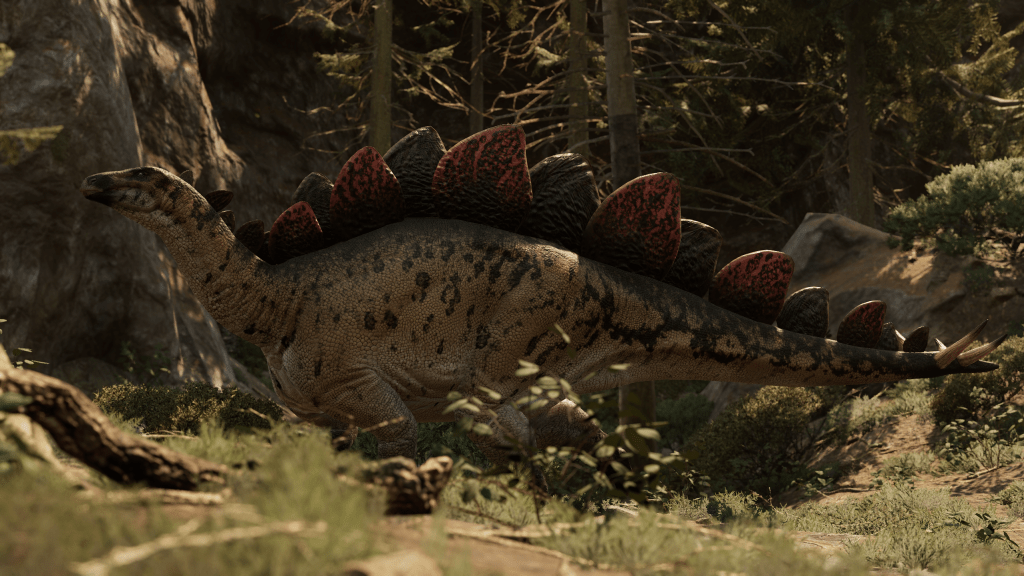
Stegosaurus lived during the Late Jurassic period, roughly 155–150 million years ago. Its fossils are primarily found in western North America, especially in what is now Colorado, Utah, Wyoming, and Montana, within the Morrison Formation, an ancient landscape of floodplains, river systems, and open woodlands that supported a wide variety of dinosaurs.
Tier: 4
Dimorphism: Males display brighter colors
Habitat: Dry Fang Canyon, Cedrus Forest
Diet: Herbivore
Active Time: Cathemeral (active at various times throughout the day and night)
Group Size: 4 individuals
Defense: 3 individuals
Nesting Season: Spring and Summer
Offspring: Up to 5
Adoption: ✅
Behavior
Stegosaurus shows a mix of social awareness and defensive instincts. Courting involves visual displays in which males posture with their large, brightly colored plates, swing their spiked tails, and perform slow, deliberate movements to demonstrate strength and health. Subtle vocalizations or low-frequency rumbles may help attract mates or signal readiness. Nesting behavior is simple but protective; females lay small clutches of eggs in shallow scrapes or low mounds of vegetation, often choosing quiet, sheltered areas. Adults do not tend the eggs directly but remain nearby while feeding, keeping watch for potential threats. Predator reactions are far more dramatic: when confronted by predators, Stegosaurus turns its body sideways to appear larger, stamps its feet, and displays its plates. If the threat persists, it uses its powerful tail spikes in fast, sweeping strikes capable of shattering bone. This combination of intimidation displays and devastating tail attacks makes Stegosaurus a surprisingly formidable herbivore.
Courting & Nesting
Stegosaurus courts by facing a mate side-on and raising its broad back plates, which in males are often brightly colored, creating a bold visual display across the herd. It swings its spiked tail in controlled, deliberate motions to show strength while keeping rivals at a distance. When nesting season arrives, Stegosaurus digs shallow pits in warm soil, lays clutches of eggs, and covers them carefully to incubate beneath the sun-heated ground. Hatchlings emerge fully formed and alert, ready to move with the herd soon after breaking free from their eggs.
Mandatory Behavior
Social Butterfly
Stegosaurus are highly social herbivores, moving in steady herds and grazing alongside other plant-eating dinosaurs. They share feeding grounds peacefully, relying on group size for protection and using posture and plate displays to maintain order within mixed herds. By staying close to other herbivores, Stegosaurus strengthens collective defense against predators and helps create stable, cooperative grazing communities across its environment.
Personal Bubble
Stegosaurus is social with other herbivores but maintains a cautious distance from much larger species such as Parasaurolophus. It keeps several meters of space to avoid accidental trampling, adjusting its position within the herd as massive giants move through shared grazing areas. This spacing allows Stegosaurus to safely interact with its own kind while coexisting peacefully in mixed-herbivore environments.
You Ain’t Sly
Stegosaurus often acts as an early-warning sentinel in mixed-herbivore herds. Its raised plates and keen awareness of movement allow it to spot approaching predators quickly, signaling danger through sudden tail swings and elevated posture. This alerting behavior gives nearby herbivores extra time to react, making Stegosaurus a key contributor to the herd’s collective safety.
Optional Behavior
Here Comes The Sun
On sunny days, Stegosaurus herds soak in the warmth, and the sunlight seems to energize them. Members of the herd often break into playful bursts, running short distances, weaving between one another, and engaging in tag-type games. Often chasing, dodging, and gently nudging each other, turning the grazing grounds into a lively playground.
Finders Keepers?
Stegos are gentle and protective toward young herbivores, often adopting a nurturing role for any baby they encounter, nuzzling, guiding, and keeping the little one close. Sometimes, their curiosity and affection get the better of them, and a bold Stegosaurus may even try to steal a baby from another mother, leading to playful chases and gentle tussles within the herds as they test boundaries while caring for the young.
I Whip My Tail Back and Forth
During migrations, Stegosaurus typically travel at the rear of mixed-herbivore herds, using their spiked tails as a mobile line of defense. Positioned at the back, they can fend off predators attempting to ambush the herd from behind, swinging their thagomizers with precision while the rest of the herd moves ahead safely. This rear-guard role makes them both protectors and sentinels during long journeys across open landscapes.
Credits: Littlered
Sources:
https://en.wikipedia.org/wiki/Stegosaurus
https://www.science.org/content/article/stegosaurus-tail-barbs-made-them-deadly-fighters
https://dinomuseum.ca/2021/02/under-the-roof-of-stegosaurus
Last updated: 2/18/26
 Ashes of Apex Fantasy Realism