Struthiomimus
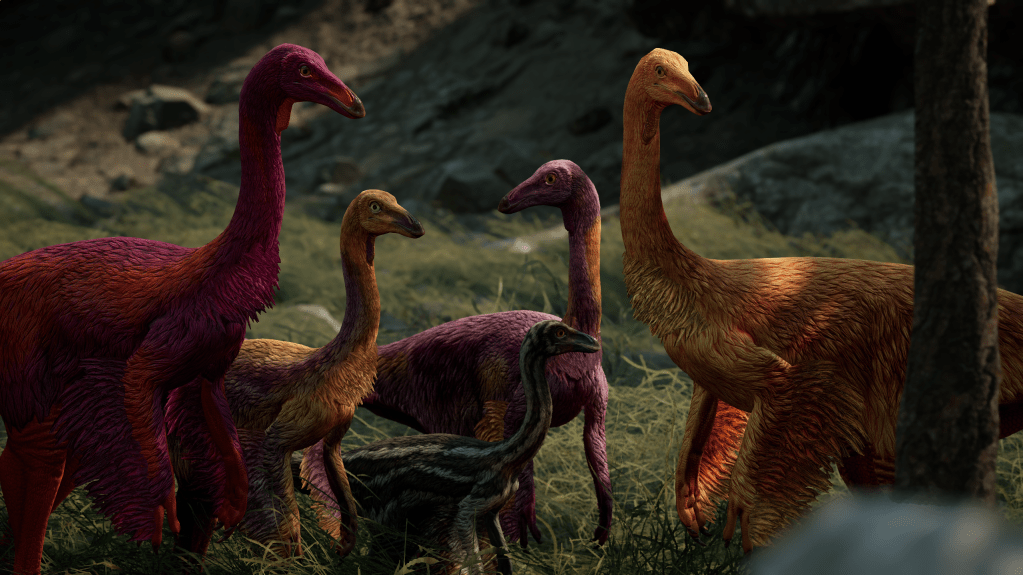
Struthiomimus lived during the Late Cretaceous period, roughly 76–70 million years ago, in what is now western North America. Fossils have been found mainly in Alberta, Canada, and Montana, USA, indicating it inhabited open plains, river valleys, and forested areas. Its lightweight, agile body and long legs suggest it thrived in environments where it could run quickly to escape predators while foraging for plants, insects, and small animals.
Tier: 1
Dimorphism: No
Habitat: Struthiomimus can nest anywhere in Riparia. Suggested areas include: Dry Fang Canyon, Cedrus Forest
Diet: Herbivore
Active Time: Struthiomimus is thought to have been diurnal, meaning it was most active during the daytime. Its keen eyesight, long legs, and fast running ability suggest it foraged for plants and berries in daylight, when visibility was best for spotting food and avoiding predators.
Group Size: 12 individuals
Defense: 6 individuals
Nesting Season: Spring and Summer
Offspring: Up to 5
Adoption: ✅
Behavior
Struthiomimus is an agile and alert dinosaur, spending much of its day foraging for plants and berries. During courtship, males use visual displays, such as flaring their arms, hopping, or running in circles to attract females, while subtle vocalizations help communicate readiness to mate. Nesting behavior involved selecting open or lightly covered areas to lay eggs, with parents guarding or inspecting the nest to protect their clutch from predators. When faced with danger, Struthiomimus relies on its speed and agility, sprinting away in bursts, zig-zagging to confuse attackers, or seeking cover in dense vegetation. Socially, it lives in small herds of twelve but only six of those can defend, enhancing protection and allowing juveniles to practice playful chasing or light sparring that also builds coordination and awareness of threats.
Mandatory Traits
Shadow Sprint
When danger appears, Struthiomimus springs into action with lightning-fast sprints and zig-zag maneuvers, darting between rocks, shrubs, and trees to confuse predators. Its large eyes constantly scan for threats, allowing it to anticipate attacks and react almost instantly. Young dinosaurs often mimic adults, learning evasive patterns through playful practice. This behavior ensures survival in an ecosystem filled with hungry theropods, making speed and vigilance the ultimate defenses.
Wanderlust Waddle
Struthiomimus regularly patrols its home range or roams in small herds, moving from berry patches to water sources and scouting safe nesting areas. Its lightweight, agile body allows it to cover large distances efficiently, avoiding overgrazed areas and seeking fresh food. These explorations also help juveniles learn the terrain, spot hiding spots, and recognize seasonal changes in their environment. Wanderlust Waddle is not only practical but also keeps the herd alert and cohesive.
Feathered Fellowship
Living in small herds provides Struthiomimus with safety, learning opportunities, and companionship. Adults guide juveniles in foraging and predator awareness, while playful chasing, nudging, and tail flicking help build coordination and social bonds. When threatened, herd members often communicate silently through body language or low calls, coordinating rapid escapes. Feathered Fellowship emphasizes the importance of cooperation, teaching young dinosaurs the ways of their world while turning survival into a communal, interactive experience.
Optional Traits
Pebble Pouncer
Struthiomimus often encounters small stones, sticks, or other objects during its explorations, and juveniles in particular will bat, flick, or hop over them in a playful, curious manner. This behavior helps them practice coordination, balance, and reflexes, while also satisfying their natural curiosity. Sometimes adults join in briefly, nudging or tossing objects with their claws, turning simple exploration into a small social game that strengthens herd bonds.
Sunbeam Stretch
When the herd finds a patch of warm sunlight, Struthiomimus will arch its back, stretch its legs, and tilt its head toward the sun, soaking up energy and warming muscles after periods of movement. This behavior is both relaxing and functional, helping maintain agility and readiness for sudden bursts of speed if a predator appears. Young dinosaurs often mimic adults, stretching together in small groups, creating a peaceful social moment within the herd.
Credits : Littlered
Sources : https://en.wikipedia.org/wiki/Struthiomimus https://www.prehistoric-wildlife.com/species/struthiomimus/ https://www.britannica.com/animal/Ornithomimus
Last updated : 10/31/2025
 Ashes of Apex Fantasy Realism