Tropeognathus
Tier: 2
Dimorphism: None
Habitat
- Riparia: Costal Buffs, Volcano Islands
- Gondwa: Flyer’s Bluff, Pebble Isle
Diet: Piscivore (fish), Carnivore
Active Times: Cathemeral (active irregularly at any time of day or night)
Group Size: 5 individuals
Attackers/Defenders: 5 individuals
Nesting Season: Spring
Offspring: 1 offspring
Adoption: ❌
Behavior
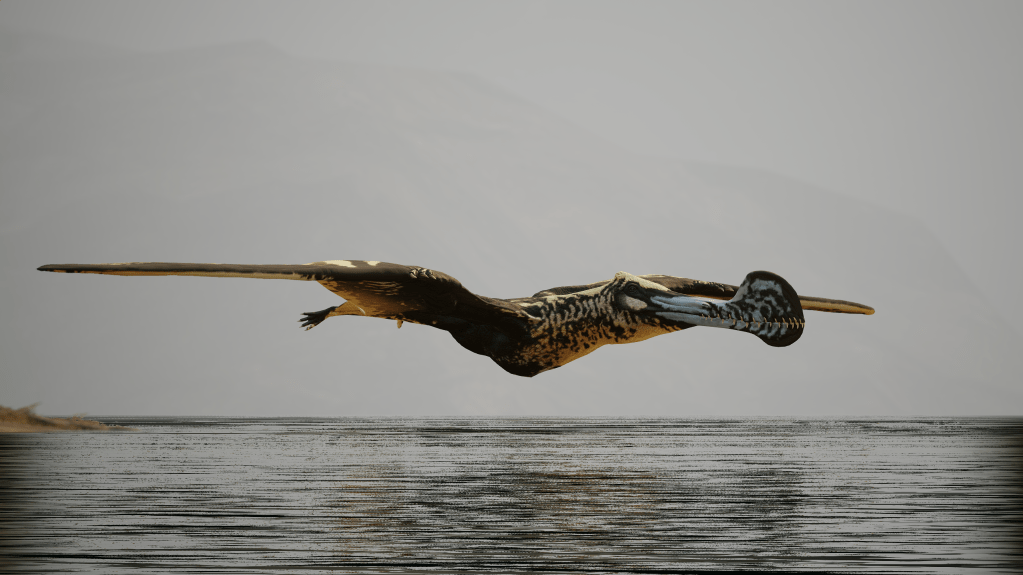
Tropeognathus are large, nomadic pterosaurs that spend most of their lives over the open ocean. Outside of the breeding season in Spring, they can be seen flying over the sea in search of food. They seldom land, only to regain their stamina before taking to the skies again. Their long, narrow wings make them perfectly adapted for gliding over huge bodies of water, diving, and swimming. They breed in secluded areas such as Coastal Bluffs and Volcano Islands, alongside the Thalassodromeus, which they mostly tolerate. They are monogamous and mate for life.
Mandatory Traits
Two is a Party, Three is a Crowd
Once returning to the breeding grounds, Tropeognathus are known to perform elaborate courtship rituals. Males and females stand tall with their large wings spread wide, clack their huge beaks rapidly, and bow their heads up and down at one another in order to communicate their physical fitness and maturity. Once a pair has formed, they build their nests of branches and reeds and prepare for just one egg to hatch. They take turns foraging at sea for their single offspring, and each parent can sometimes be gone for days. Once their young are adolescents, the pair take to the sky for their annual migration, leaving their young to fend for themselves.
Leap of Faith
Adolescent Tropeognathus teach themselves to fly, swim, and fish with no help from their parents. They need to learn quickly, as their secluded breeding grounds lack freshwater sources, and they are now too old to drink from the nest. How they learn to fly depends on where they are born:
- Volcano Islands/Pebble Isle: Adolescents learn to fly by sprinting across the sands until they have gained enough speed to launch themselves from the ground. Once they have gained air, they attempt to climb as high as they can in order to dive back down for speed. This process may take many attempts and end with the young Tropeognathus taking crash landings.
- Coastal Bluffs/Flyer’s Bluff: Adolescents learn to fly by taking a leap from the great heights of their home’s cliffs, diving straight down. Sometimes they manage to pull out of the dive into their first flight, and sometimes they may dive straight down into the sea for their first swim. These first-time flyers sometimes use updrafts over the sea to help keep them aloft.
Wayward Wanderers
Tropeognathus forage at sea for most of their lives. They travel in small groups of 3-5 individuals and work together to spot food. These groups are non-committal, and members may break off to travel alone. Tropeognathus are known to glide across the entire continent, as far as they can with each stamina bar**, from Coastal Bluff to East Passage or Volcano Islands to Redwoods, only landing to regain stamina. They are almost never seen walking or running along the ground for any reason other than to take off into flight.
Optional Traits
The Lost Years
These young pterosaurs catch the winds over the coasts of their habitats that can blow far out to sea. Because of this, Tropeognathus can take at least two years (eight seasons) travelling the continent before returning to their home range.
Gentle Giant
Tropeognathus are familiar with Thalassodromeus from the day they hatch, as their smaller counterparts share the same nesting grounds. The two species of pterosaur commonly have tolerant relationships with each other. Tropeognathus, being the larger of the two, may patrol the nesting grounds in defense of its own kind as well as Thalassodromeus,
Credits: Onlooker
Sources:
https://en.wikipedia.org/wiki/Tropeognathus
https://animaldiversity.org/accounts/Diomedea_exulans/
https://youtu.be/toJwBgjCZMI?si=apTTF5JF8dvz7szy
Last updated: 11/18/2025
 Ashes of Apex Fantasy Realism